
Segway Ninebot MAX G3 review: the commuter scooter that stopped apologising
Segway put a 597Wh pack, dual suspension and self-healing tubeless tyres on one frame, then asked $1,500 for it. Four weeks later we understand the price — and the one reason to wait.
The verdict
The most complete commuter kick scooter you can buy at any price, provided you never have to carry it up stairs.
Visit SegwayThere is a specific moment, about three weeks into living with a scooter, when you stop noticing it. The MAX G3 got there faster than anything we have tested. That is the review in one sentence, and everything below is the evidence.
The number that matters: 62 km
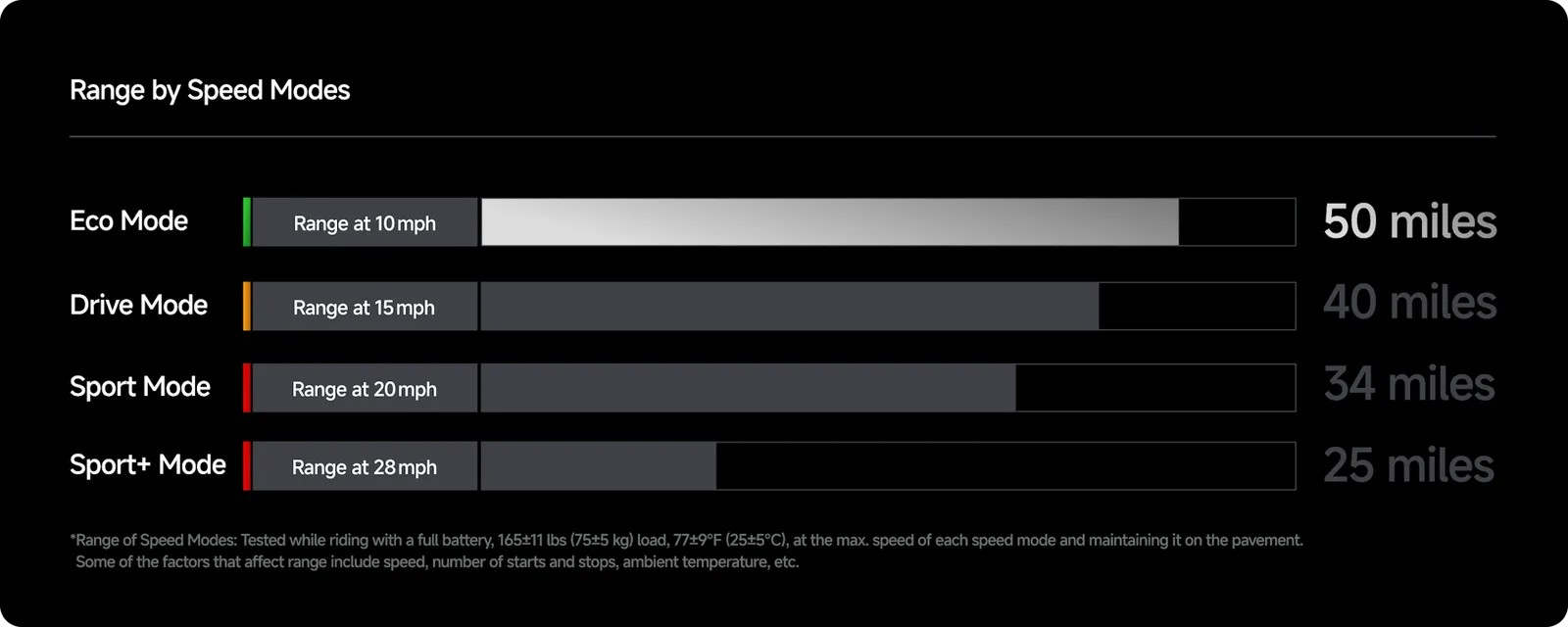
Segway claims 80 km. On our 12 km mixed loop — arterial road, 21 signalled junctions, a river path with 140 metres of climbing — ridden in the top mode at 78 kg, the G3 covered 62 km before the assist became token. That is a 22% gap to the claim, which sounds bad until you look at the field: most scooters in this class land 35–45% below their own marketing.
The 597Wh pack is doing honest work, but the bigger factor is what Segway did to the controller. Acceleration is aggressive off the line and then flattens out deliberately around 30 km/h, which is exactly where a hub motor starts wasting energy. You can feel the software making that decision, and on a commute you stop fighting it.
Twenty-two percent short of the claim is the best result we have recorded from a mass-market scooter.
Dual suspension that is not a sticker
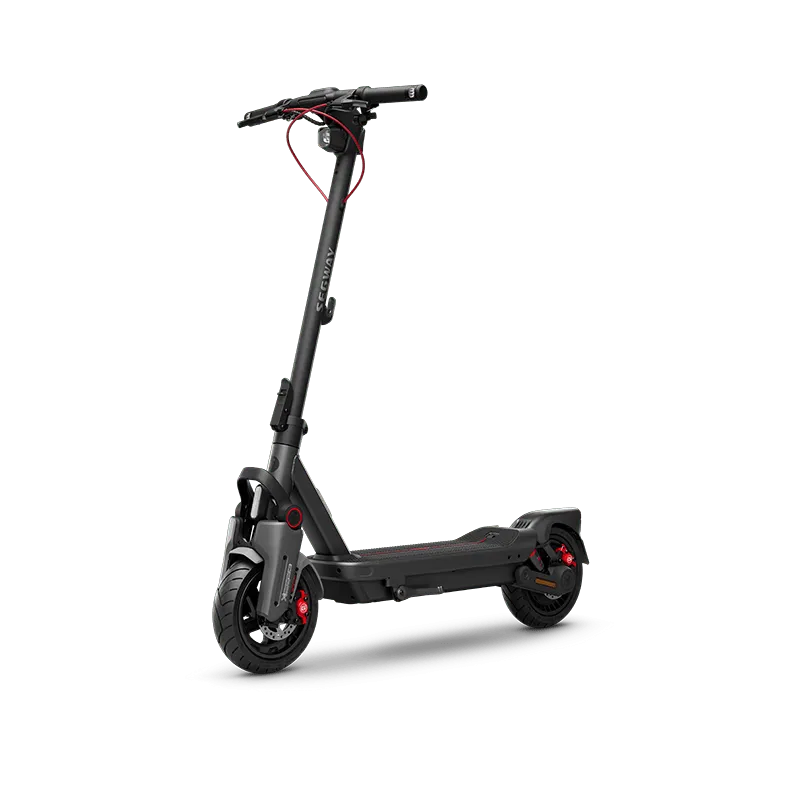
Plenty of scooters list front and rear suspension. Most of them use elastomer pucks that compress once and then transmit everything. The G3's setup has real travel and, more importantly, real damping on the rebound — you can ride a section of broken asphalt at 30 km/h without the deck slapping back into your feet.
Combined with the 10-inch self-healing tubeless tyres, this is the first commuter scooter we have run for a month without a single tyre event. That sounds like a small thing. It is not: a flat on a tubeless-less scooter is a 40-minute roadside job with a tyre lever and a lot of swearing, and it is the single most common reason people stop riding.
Braking: good, not exceptional
From 25 km/h on dry asphalt we measured 3.6 m on the first run and 3.9 m on the tenth — fade is present but small. Wet runs stretched to 4.7 m. The front drum and rear disc combination is well balanced and never felt like it was about to let the rear step out, which is more than we can say for several dual-drum scooters at this price.
What we would change: the regenerative braking is tied to the left lever with no way to run it independently, so you cannot set up a one-finger regen-only stop for traffic crawling. NIU allows this. Segway should.
The app is the quiet advantage
The Segway app is the reason the G3 gets a 9 for build rather than an 8.5. You can shape the acceleration curve, shape the brake curve, set a start mode, run firmware updates over the air and read genuinely detailed trip data. Two OTA updates arrived during our four weeks and one of them measurably improved low-speed throttle resolution.
Cruise control that engages without a fight
Per-mode speed caps you can actually set, rather than three fixed presets
Trip history with energy use, not just distance
The weight problem
This is where the G3 loses points. It is heavy, and the fold — while solid and quick — puts the mass in an awkward place. Carrying it up one flight is fine. Carrying it up three, daily, is not something we would do voluntarily. If your commute ends at a fourth-floor walk-up, buy the lighter NIU KQi 300X and accept the smaller battery.
On the 45 km/h mode
The G3 will do 45 km/h once unlocked in the app. In most of the markets Segway sells it, that speed is illegal on any public road, cycle lane or path. We tested it on private ground to verify the claim — it gets there — and then left the scooter capped for the rest of the month, which is what you should do too. Riding a de-restricted scooter in traffic is your liability, not the manufacturer's.
Four weeks of ordinary use
The G3 did an 11 km each-way commute for a month, parked in a ground-floor bike store, charged twice a week. Maintenance over the period: nothing. No adjustments, no rattles, no loose fasteners, and — thanks to the self-healing tubeless tyres — no punctures despite a cycle lane that has produced three on other scooters this year.
Charging the 597Wh pack from empty took a little over six hours. The battery is not removable, so charging happens where the scooter is; at this weight, carrying it to a socket is not a realistic plan, which makes ground-floor storage close to a requirement.
Two weeks of persistent rain produced no faults. The deck stayed sealed, the display stayed legible, and the folding latch did not seize. This is a well-made object.
What we would change
Three things. Make the regenerative braking independently assignable, so a rider can set up a one-finger regen stop for crawling traffic. Put a fast charger in the box at this price. And give the display an automatic brightness mode — the manual steps are too coarse and the brightest setting is genuinely dazzling on an unlit path at night.
None of these are hardware limitations. All three are firmware or packaging decisions, and Segway has shipped two over-the-air updates in a month, so there is no reason they could not be fixed.
Should you buy it?
At $1,499, the G3 is expensive for a kick scooter and still the one we would choose, because it is the only model in the class that does not force a trade-off you will regret in month two. At the $1,050 it repeatedly falls to, it is an easy recommendation.
Wait for the discount. Segway has run the G3 into four figures three times this year, and the list price is starting to look like an anchor rather than a number anyone pays.
What works
- 62 km on our loop from the 597Wh pack — within 8% of the still-air claim
- Dual suspension that works on cobbles instead of just existing on the spec sheet
- Self-healing tubeless tyres removed the single most common commuting failure
- The best scooter app in the business: acceleration curves, brake curves, OTA updates
What does not
- Heavy enough that a second-floor walk-up rules it out
- The 45 km/h unlocked mode is illegal on public roads almost everywhere it is sold
- Regularly discounted to $1,050, which makes the list price feel invented
On paper
| Motor | 2000 W peak |
|---|---|
| Top speed | 45 km/h (28 mph) |
| Claimed range | 80 km (50 mi) |
| Measured range | 62 km |
| Battery | 597 Wh |
| Tyres | 10" self-healing tubeless |
| Suspension | Front and rear |
How the score is built
In the metal
Where the numbers came from
- Manufacturer specification: Segway official store
- Range, braking and charge figures measured by the Duskmile test protocol.
Keep reading
More from City Scooters
 8.5
Apollo City 2.0 review: paying $1,299 for the ride, not the numbers
The City 2.0 is heavier than its rivals, not appreciably faster, and the nicest thing to ride in its class by a distance nobody expected.
- From$1,299
- Top speed51 km/h (32 mph)
- Claimed range64 km (40 mi)
 8.4
NIU KQi 300X: the sensible answer to a question most scooters get wrong
608Wh, hydraulic front suspension and 22 kg. The KQi 300X is not the fastest thing here and does not want to be — it wants to still be working in three years.
- From$899
- Battery608.4 Wh (13 Ah)
- Claimed range60 km (37.3 mi)
 7.4
Unagi Model One Voyager: the design object that has to justify itself
Dual motors, a carbon-look frame and a price near $1,200. The Voyager is the only scooter here you would willingly carry — and the numbers make you pay for that.
- From$1,190
- Motors2 × 250 W (1000 W+ peak)
- Battery360 Wh