
NIU KQi 300X: the sensible answer to a question most scooters get wrong
608Wh, hydraulic front suspension and 22 kg. The KQi 300X is not the fastest thing here and does not want to be — it wants to still be working in three years.
The verdict
Buy this if you want a scooter you will forget about. It is slower and duller than its rivals, and it will outlast all of them.
Visit NIUThe problem the KQi 300X is actually solving
Most commuter scooters are sold on a top speed nobody is legally allowed to use. The KQi 300X is sold on a range figure and a weight figure, and that turns out to be a much better way to choose one.
NIU's pitch is simple: 608.4Wh of battery inside a scooter that weighs 22.1 kg. For comparison, Segway's MAX G3 carries a slightly smaller 597Wh pack and is meaningfully heavier. If your commute involves stairs, a train carriage or a car boot, that difference is the entire decision.
What we measured
Our 12 km loop, top mode, 78 kg rider: 51 km. NIU claims 60 km, so the gap is 15% — the smallest we have recorded from any scooter, e-bike or moped on the bench this year. NIU's FOC sine-wave controller deserves the credit; it is noticeably smoother at part throttle than the square-wave controllers still shipping on cheaper machines, and smoothness is efficiency.
Braking was the weak spot. New out of the box, the rear disc needed 4.4 m from 25 km/h dry, which is poor. After about 100 km of bedding in, that dropped to 3.8 m and stabilised. Wet performance was 4.9 m. Acceptable, not impressive, and clearly behind the hydraulic setups on Kaabo's machines.
The suspension is the upgrade you can feel
The 300X takes the KQi 300P platform and adds an aerospace-grade aluminium dual-tube hydraulic fork with 45 mm of stroke. On a scooter with 10-inch wheels, 45 mm is a lot — enough to take the edge off tram rails and utility trench repairs without the vague pogo feel of a cheap spring fork.
There is no rear suspension, and that is a real omission at this price. Over a long stretch of badly patched road your back foot takes everything. We adapted by shifting stance, which is not a fix, it is a habit.
25% hill grade, tested
NIU quotes 25% climbing ability. On a 180 m stretch at roughly 18% we held 21 km/h with a 78 kg rider and arrived with the motor warm but not hot. On the steepest section we could find, briefly over 24%, it kept moving at walking pace without cutting out. The claim is honest, which is rarer than it should be.
Living with it
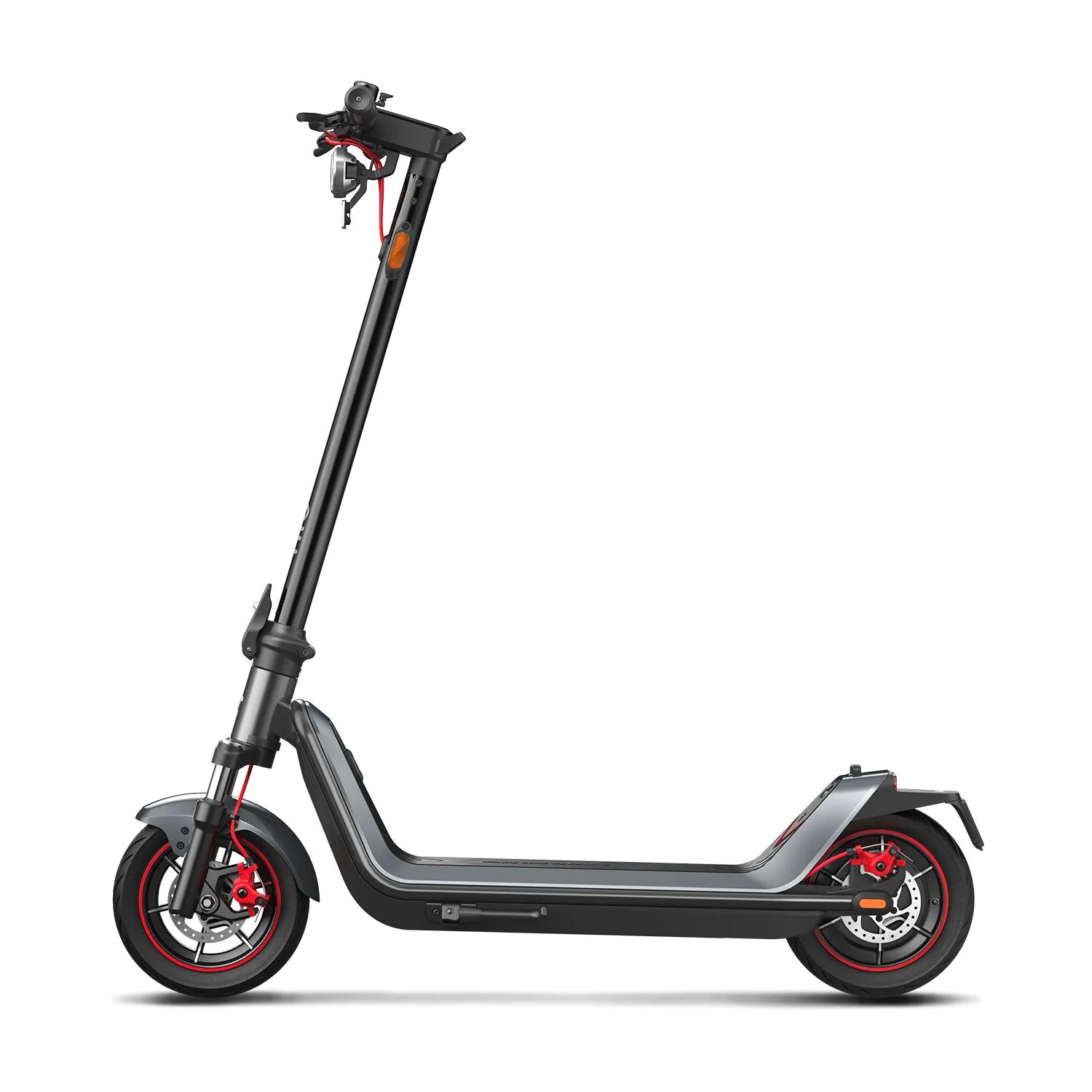
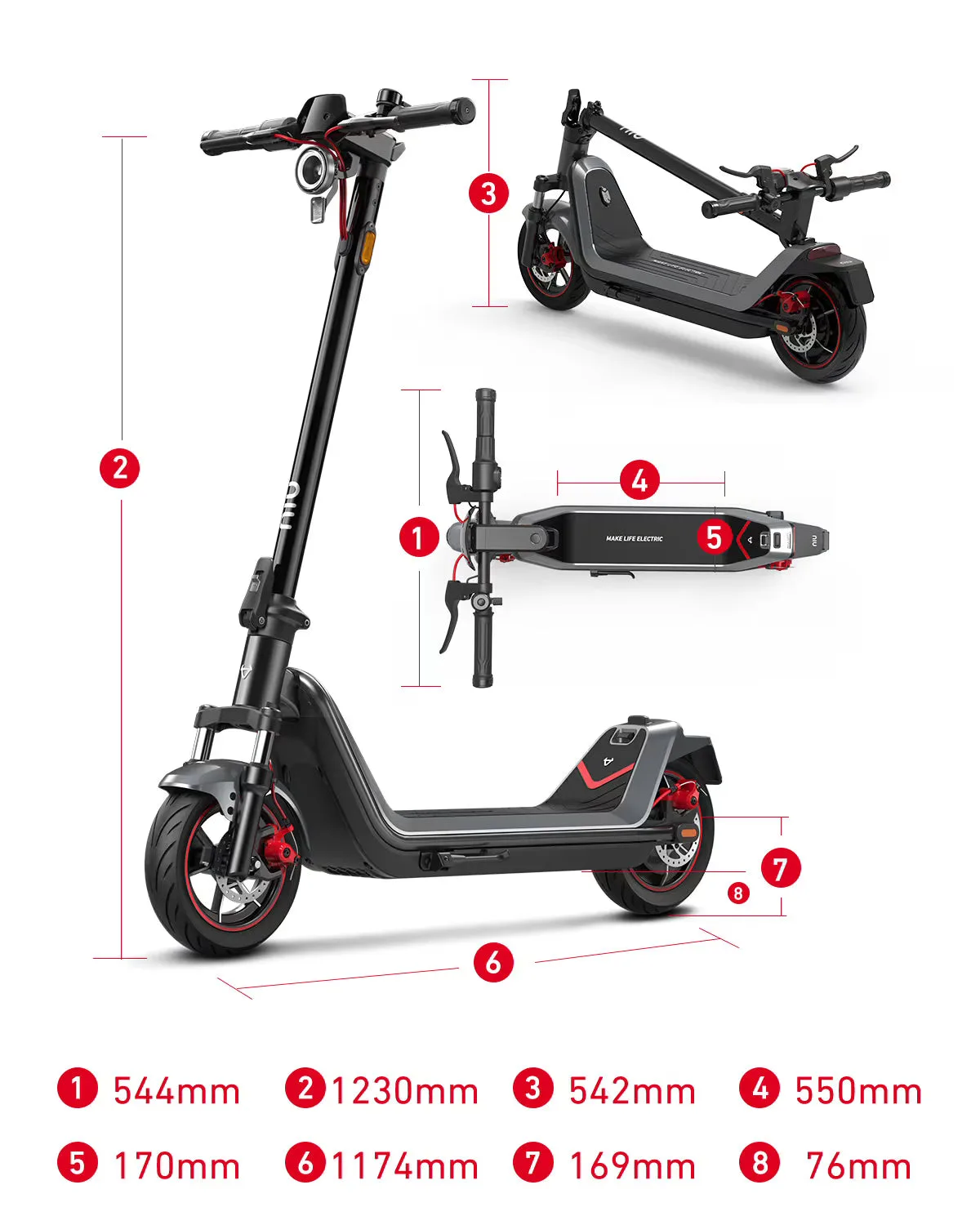
The fold is a single lever and a hook, and it stayed tight for the whole month
The deck is wide enough to stand with feet side by side, which matters more than any spec
Regenerative braking is adjustable in three steps, and the strongest setting genuinely slows you enough for stop-start traffic
The display washes out in direct midday sun — the one piece of hardware that feels built to a price
Four weeks of ordinary use
The 300X did a 7 km each-way commute for a month, parked outside a building with no bike store, and charged indoors every third evening. It needed the rear brake adjusting once, at around the 100 km mark when the pads had bedded, and nothing else.
Charging the 608.4Wh pack from empty took a little over six hours. The battery is not removable, which is the one structural limitation: you charge the scooter where the scooter is. At 22.1 kg, carrying it inside to a socket is at least practical, which it is not on the 33 kg Apollo.
The tyres are tubeless and the deck is sealed properly. Two weeks of persistent rain produced no water ingress, no corrosion on the fasteners and no display faults. NIU's build tolerances are visibly tighter than the budget end of this market, and it is where the $899 goes.
The parts question
NIU sells through dealers as well as direct, which means brake pads, tyres, chargers and even controllers are orderable without waiting on a container from overseas. Over a three-year ownership period that is worth more than any single specification on this list.
It is also the argument against the cheaper machines in the budget category. A scooter you cannot get a replacement charger for is a scooter with an expiry date.
Against the MAX G3
Segway's MAX G3 is faster, better damped and better braked, and costs $600 more at list. The KQi 300X gives up 11 km of measured range and about 13 km/h of top speed, both of which matter less than they sound on a 6 km urban commute.
Our rule: if you carry the scooter more than twice a day, buy the NIU. If you never carry it, buy the Segway and enjoy the suspension.
Verdict
The KQi 300X is boring in the way a good appliance is boring. It will not thrill you on the first ride. It will still be doing exactly what it did on day one when the exciting scooter you nearly bought is waiting for a controller from overseas.
What works
- 608.4Wh in a 22 kg package — the best energy-to-weight ratio in the class
- Dual-tube hydraulic front suspension with 45 mm of usable stroke
- NIU's app is the only one that rivals Segway's, and it does regen properly
- Parts availability through a real dealer network, not a support email address
What does not
- 32 km/h feels tame after a week on anything with dual motors
- Rear disc lacks bite until it is bedded in, which takes about 100 km
- No rear suspension, and you notice it on repaired asphalt
On paper
| Battery | 608.4 Wh (13 Ah) |
|---|---|
| Claimed range | 60 km (37.3 mi) |
| Measured range | 51 km |
| Top speed | 32 km/h (20 mph) |
| Weight | 22.1 kg (48.7 lb) |
| Suspension | Hydraulic front, 45 mm stroke |
| Brakes | Dual disc + regen |
How the score is built
In the metal
Where the numbers came from
- Manufacturer specification: NIU official store
- Range, braking and charge figures measured by the Duskmile test protocol.
Keep reading
More from City Scooters
 8.7
Segway Ninebot MAX G3 review: the commuter scooter that stopped apologising
Segway put a 597Wh pack, dual suspension and self-healing tubeless tyres on one frame, then asked $1,500 for it. Four weeks later we understand the price — and the one reason to wait.
- From$1,499
- Motor2000 W peak
- Top speed45 km/h (28 mph)
 8.5
Apollo City 2.0 review: paying $1,299 for the ride, not the numbers
The City 2.0 is heavier than its rivals, not appreciably faster, and the nicest thing to ride in its class by a distance nobody expected.
- From$1,299
- Top speed51 km/h (32 mph)
- Claimed range64 km (40 mi)
 7.4
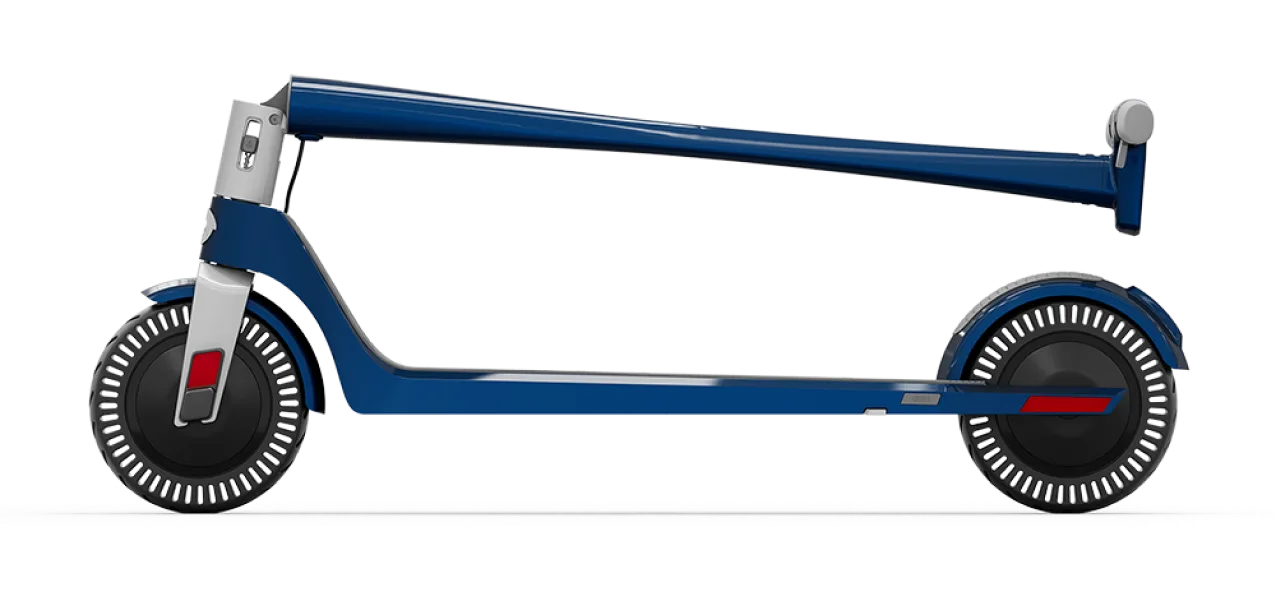
Unagi Model One Voyager: the design object that has to justify itself
Dual motors, a carbon-look frame and a price near $1,200. The Voyager is the only scooter here you would willingly carry — and the numbers make you pay for that.
- From$1,190
- Motors2 × 250 W (1000 W+ peak)
- Battery360 Wh