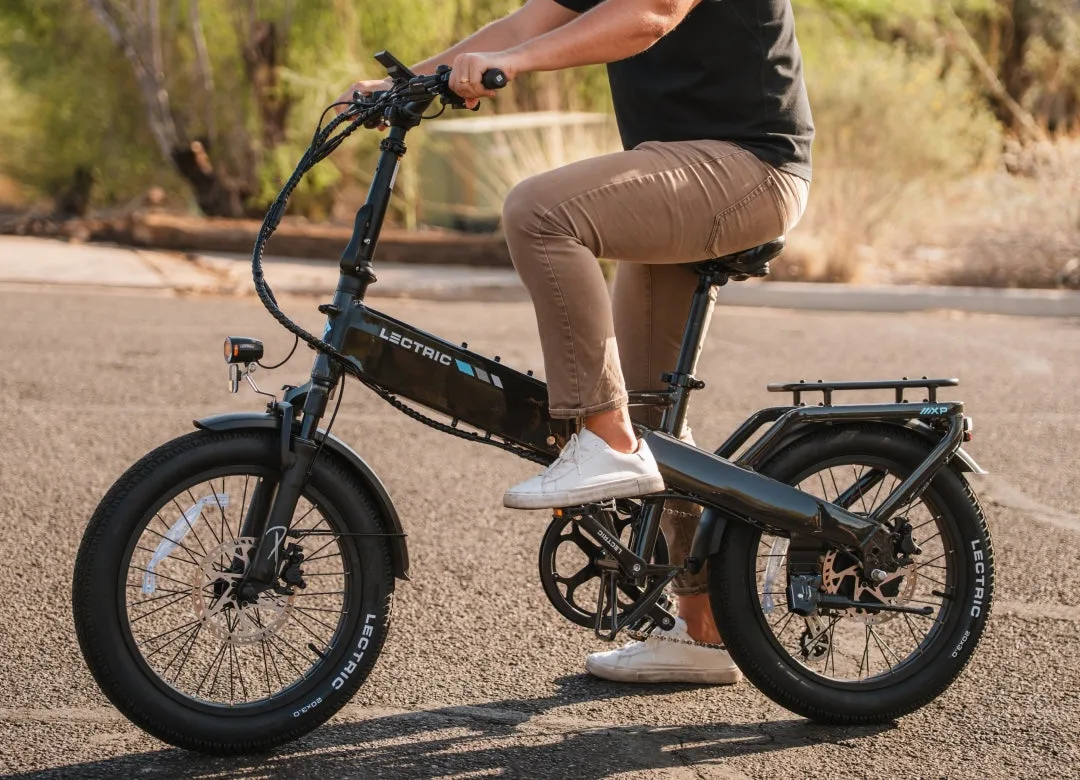
Lectric XP 4 review: a torque sensor and hydraulic brakes for $999
The XP 4 does things at $999 that cost $2,000 two years ago. It also weighs a lot and folds into an awkward lump. Both of those facts matter.
The verdict
The most bike-per-dollar on this list. Call it folding rather than portable and you will not be disappointed.
Visit Lectric eBikesTwo years ago, a torque sensor and hydraulic disc brakes on the same bike meant spending about two thousand dollars. The Lectric XP 4 has both for $999. That is the review's whole reason to exist, and it is worth taking seriously rather than treating as a stunt.
The torque sensor
Lectric developed this one in-house rather than buying a module, and it works. Assist scales with how hard you push instead of switching on when the cranks turn. The practical difference is at junctions and on gravel, where a cadence-sensor bike surges unpredictably and this one does not.
It is not as refined as the Aventon Level 3's. There is a small dead zone at very low effort and a slightly abrupt hand-off between assist levels. Both are noticeable in the first week and invisible by the third.
Which build to buy
The $999 500 W model gets a 10.4 Ah battery, 55 Nm and a claimed 80 km. Our loop at the highest assist returned 49 km, which is fine for a 10 km each-way commute.
The 750 W long-range build swaps in a 17.5 Ah pack and 85 Nm, and Lectric claims up to 137 km. If you have any hills, or any intention of riding at the weekend, it is the one to buy. The extra torque is the difference between the bike helping on a climb and the bike asking you to help it.
Brakes
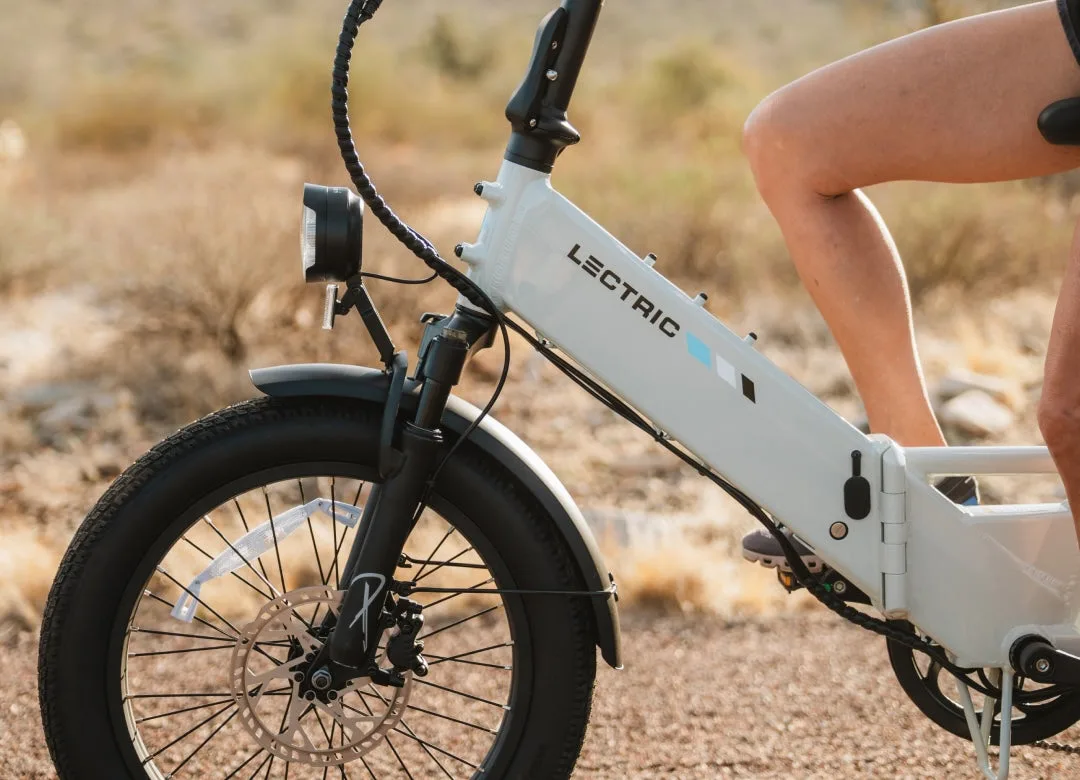
The 602 hydraulics stopped us in 4.3 m from 25 km/h dry and 5.0 m wet, with modest fade after eight stops. For a $999 bike that is a genuinely good result, and it is the single upgrade over the XP 3 that we would refuse to give up.
On the word 'folding'
The XP 4 folds. It does not become portable. Folded it is a heavy, wide, awkward shape with the battery high and the pedals sticking out, and lifting it into a car boot is a two-handed, straight-back, bend-your-knees operation.
Compare with the Brompton Electric P Line, which folds to about a quarter of the volume and can be carried onto a train. These are different products that happen to share a word. If your requirement is 'fits in the back of the car for a weekend', the Lectric is fine. If it is 'comes on the commuter train', it is not.
The display and the drivetrain
The full-colour TFT display is bright, legible in direct sun and shows assist level, speed, battery percentage and trip distance without hunting through menus. At $999 this is not normal; most bikes at this money ship a monochrome strip that washes out at midday.
The 8-speed drivetrain is the other quiet upgrade. Seven-speed freewheels are the standard fitment at this price and they run out of gear at exactly the point where a 45 km/h assist limit becomes useful. With eight speeds you can still pedal meaningfully at 30 km/h instead of spinning uselessly, which is what makes the torque sensor worth having at all.
Four weeks of ordinary use
One spoke needed tensioning at around 250 km — normal for a factory-built wheel under a heavy bike — and the rear mudguard picked up a rattle that a cable tie fixed permanently. Nothing else needed attention.
Assembly took about 30 minutes. The bike arrives mostly built, which is Lectric's genuine competitive advantage: unfold it, fit the pedals and the handlebar, charge it, ride it. Compared to the flat-packed experience most direct-to-consumer brands offer, it removes the step where people give up.
Charging the 10.4 Ah pack took about four and a half hours; the 17.5 Ah long-range pack took closer to seven. Both batteries are removable, which on a folding bike is essential rather than nice.
Where the money was saved
The saddle is uncomfortable after 30 minutes and costs $30 to fix
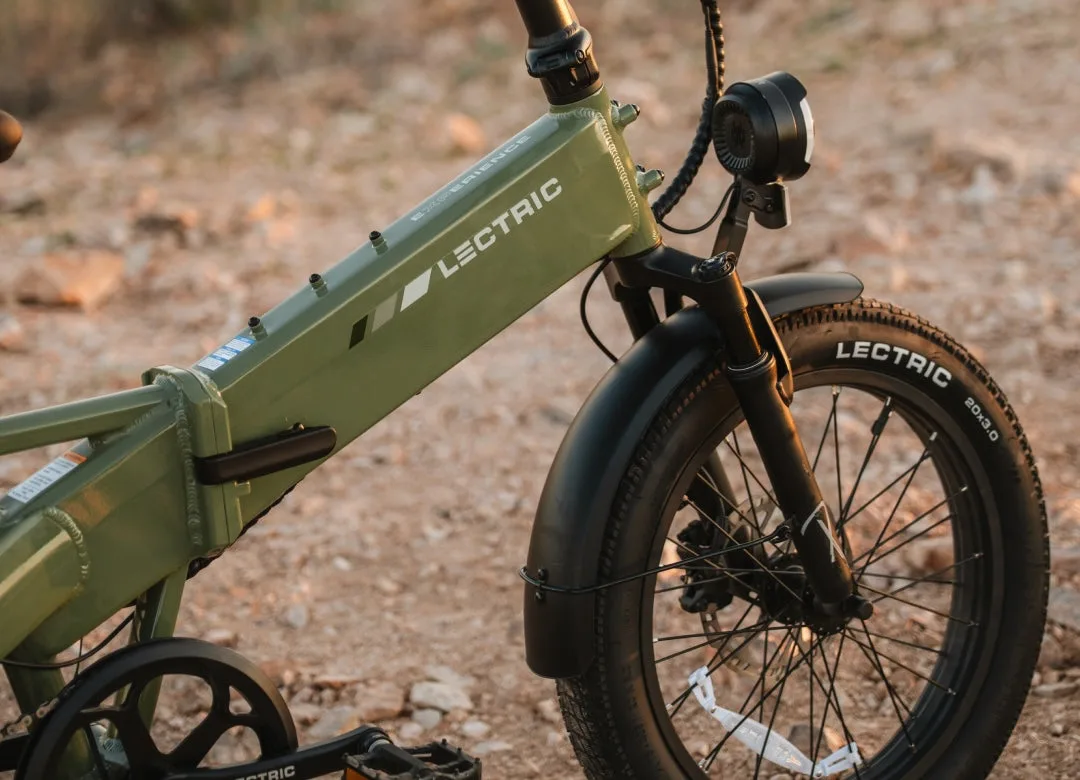
Cable routing is external and tidy rather than internal and invisible
Welds are functional, paint is thin on the chainstays
No GPS, no security system, no connectivity of any kind — which some readers will count as a feature
Verdict
8.5, and a value score of 9.6 that is doing most of the work. This is the bike to buy if $999 is the number and you want none of the usual compromises at that price. Buy the long-range build, replace the saddle, and stop worrying about it.
What works
- An in-house torque sensor at $999 — nobody else is doing this at this price
- 602 hydraulic brakes as standard on both the 500 W and 750 W builds
- Full-colour TFT display and an 8-speed drivetrain, neither of which is normal here
- The 750 W long-range build with the 17.5 Ah pack is genuinely long-legged
What does not
- Folded, it is a heavy, awkward shape — this is boot-of-a-car folding, not train folding
- The 500 W model's 10.4 Ah battery is the one real compromise in the range
- Component finish is exactly what $999 buys, and the stock saddle should be replaced on day one
On paper
| Motor (500 W build) | 500 W rear hub, 1092 W peak, 55 Nm |
|---|---|
| Motor (750 W build) | 750 W rear hub, 1310 W peak, 85 Nm |
| Battery | 10.4 Ah, or 17.5 Ah long-range |
| Claimed range | 80 km (500 W) / 137 km (750 W LR) |
| Measured range | 49 km (500 W, high assist) |
| Assist limit | 45 km/h (28 mph) |
| Brakes | 602 hydraulic disc |
How the score is built
In the metal
Where the numbers came from
- Manufacturer specification: Lectric eBikes
- Range, braking and charge figures measured by the Duskmile test protocol.
Keep reading
More from Folding & Compact
 8.6
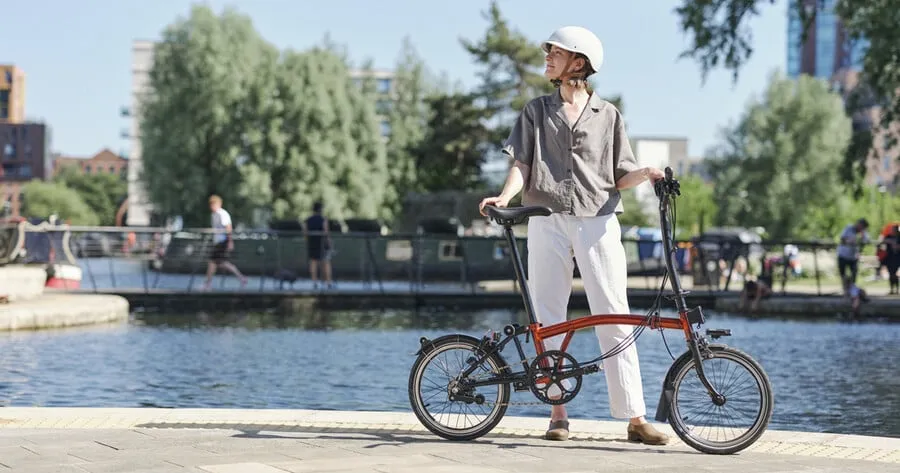
Brompton Electric P Line: $4,700 for a fold, and the fold is worth it
12.7 kg without the battery, a titanium rear triangle, and a fold nothing else comes close to. The P Line is absurdly expensive and we would still buy one.
- From$4,700
- Motor250 W brushless DC front hub
- Assist limit25 km/h (15.5 mph)