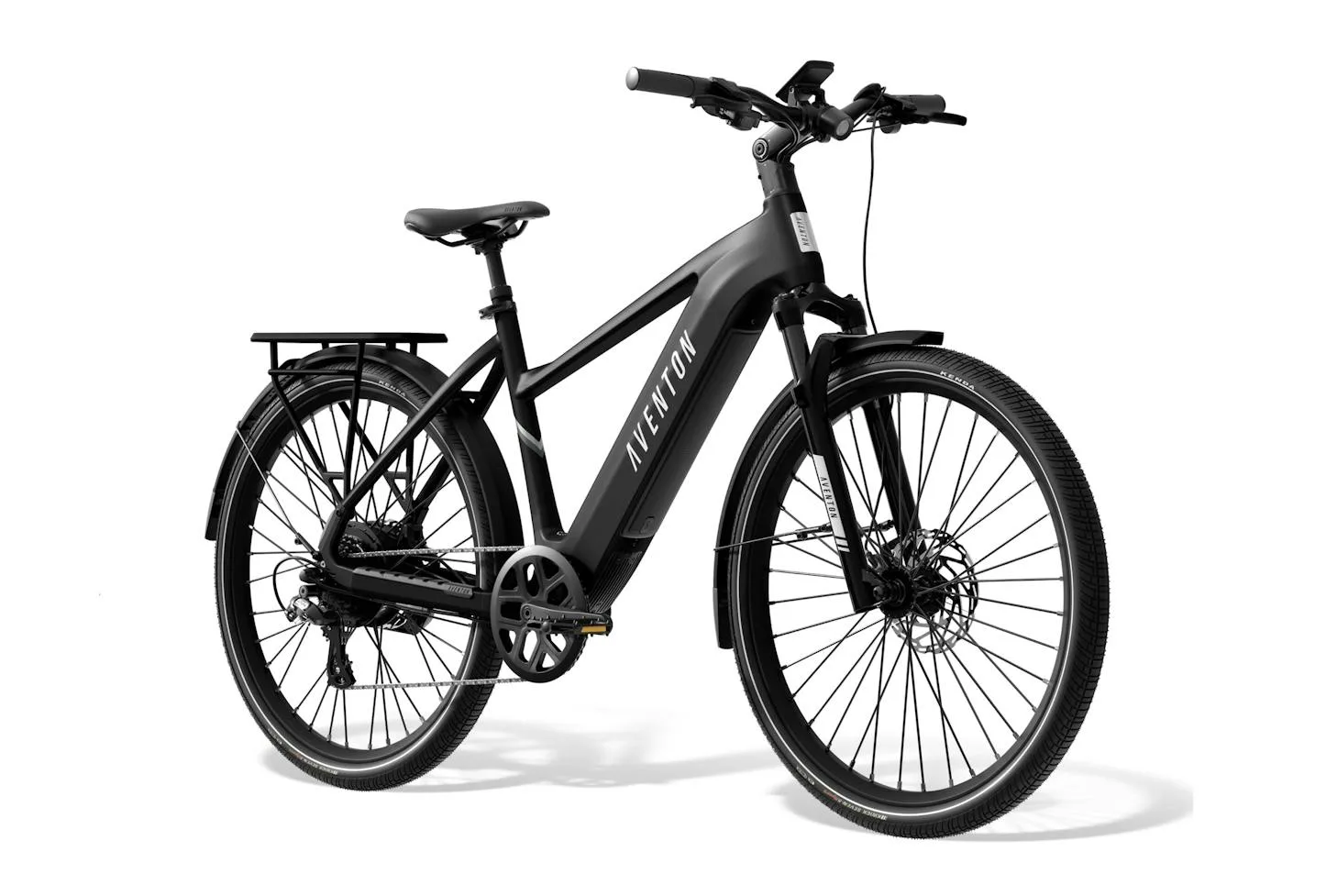
Aventon Level 3 review: the $1,899 bike that makes the $4,000 ones nervous
733Wh of LG cells, a proper internal torque sensor and GPS tracking built in. We measured 88 km. This is the best value in commuter e-bikes right now and it is not close.
The verdict
The highest-scoring bike in this index. Not the best-built, not the nicest to ride — simply the one that gets the most right for the money by an enormous margin.
Visit AventonWe did not expect to give the cheapest full-equipment commuter in this test the highest score. Then we measured the range.
Eighty-eight kilometres
Our loop, highest assist, 78 kg rider, 12 kg pannier: 88 km. The Trek Allant+ 7S managed 71 km and costs twice as much. The Specialized Turbo Vado SL 2 managed 58 km and costs nearly three times as much.
The 733Wh pack built from LG 21700 cells is the obvious reason. The less obvious one is the motor tuning. Aventon reshaped the Level 3's power curves compared to the Level 2 and the result is a bike that holds assist at road speed without dumping current to get there.
For the first time, a bike in this price bracket went further on our loop than bikes at three times the money.
The sensor switch is the smart part
The Level 3 has a real internal torque sensor, which reads how hard you are pedalling and scales assist proportionally. That is the thing that separates a bike that feels like a bicycle from one that feels like a throttle with pedals attached, and until recently it was a $3,000 feature.
Aventon also lets you switch to cadence sensing in software. That sounds like a gimmick and is not: on a long flat commute where you want steady assist without modulating effort, cadence mode is genuinely more restful. Being able to choose per ride is a legitimately good idea nobody else is doing.
Ride Tune
Each of the three assist modes exposes torque, assist strength and pedal response. We set mode one soft for cycle paths, mode two aggressive for hills and mode three flat for headwind days. Two weeks later we stopped fiddling, which is the sign of settings that work.
Security that earns its place
Aventon's ACU adds GPS tracking, motion alerts and auto-lock that engages the motor when the bike is moved without the owner nearby. We tested the alert by having somebody wheel it 40 metres away; the phone notification arrived in under 15 seconds with a map pin.
For anyone locking a bike outside in a city, this is the feature that changes whether you ride it to the places you actually want to go.
Four weeks of ordinary use
The Level 3 did a 16 km each-way commute for a month, including a fortnight of rain and one week where it was left locked outside an office overnight because of a late finish. It came back each morning.
Maintenance over the period: one rear derailleur cable adjustment at around 200 km, and lubricating the chain twice. The integrated lights never needed touching because they run from the main battery. The mudguards kept the drivetrain out of the worst of the road spray, which is exactly what they are for and which most budget commuters do badly.
Charging the 733Wh pack from empty took a little under six hours. The battery is removable and the lock mechanism is easy with cold hands, which sounds trivial until you have used one that is not.
The number that decides it
Almost every commuter e-bike question reduces to whether you can do the week on one charge. At 88 km measured, a 16 km each-way commute means charging on Thursday night instead of every night, and that is the difference between a bike you use and a bike you plan around.
Aventon's own range estimate in the app was within about 6 km of reality across the month, which is honest by the standards of this industry. Bosch does better; nobody else at this price comes close.
Where the money was saved
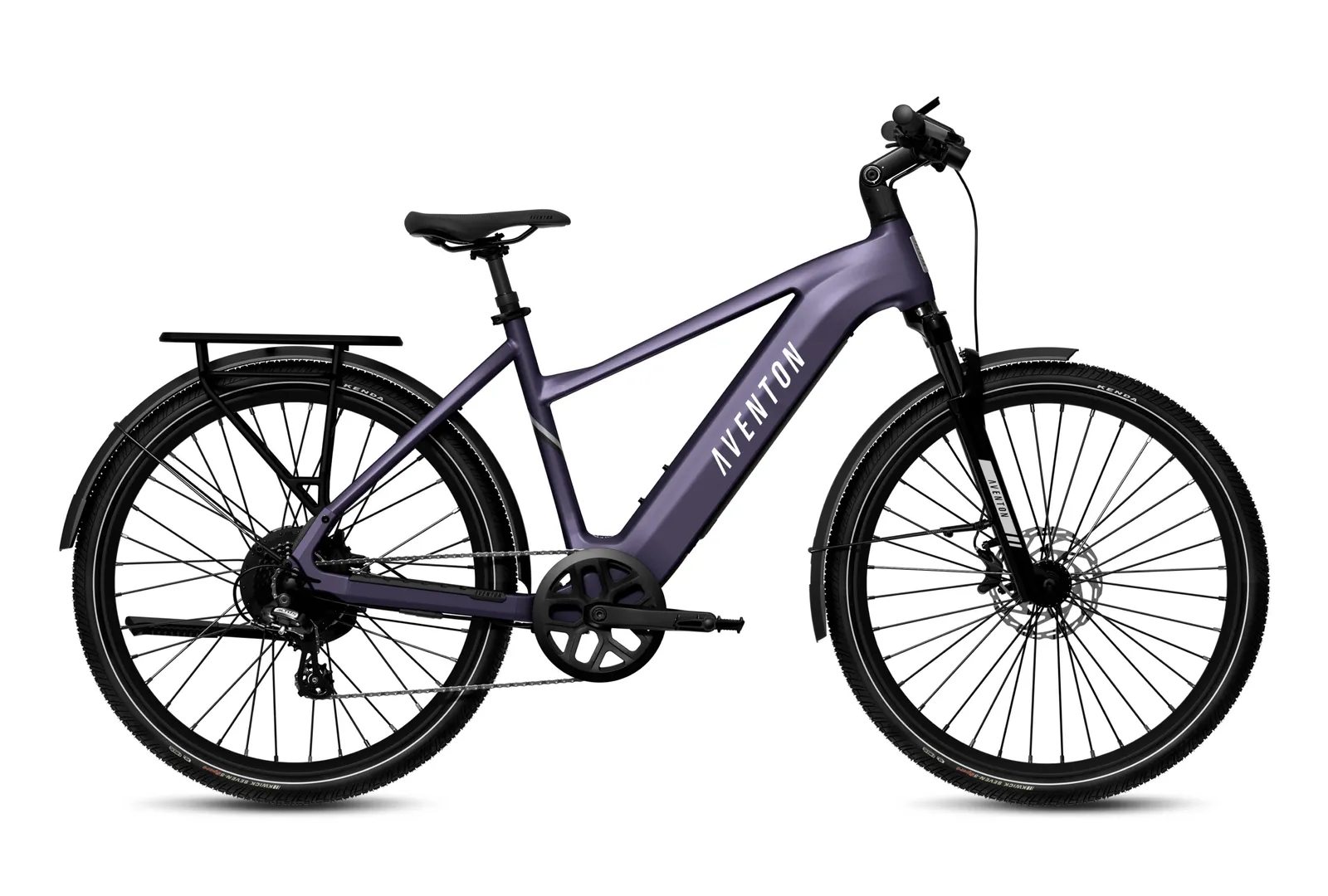
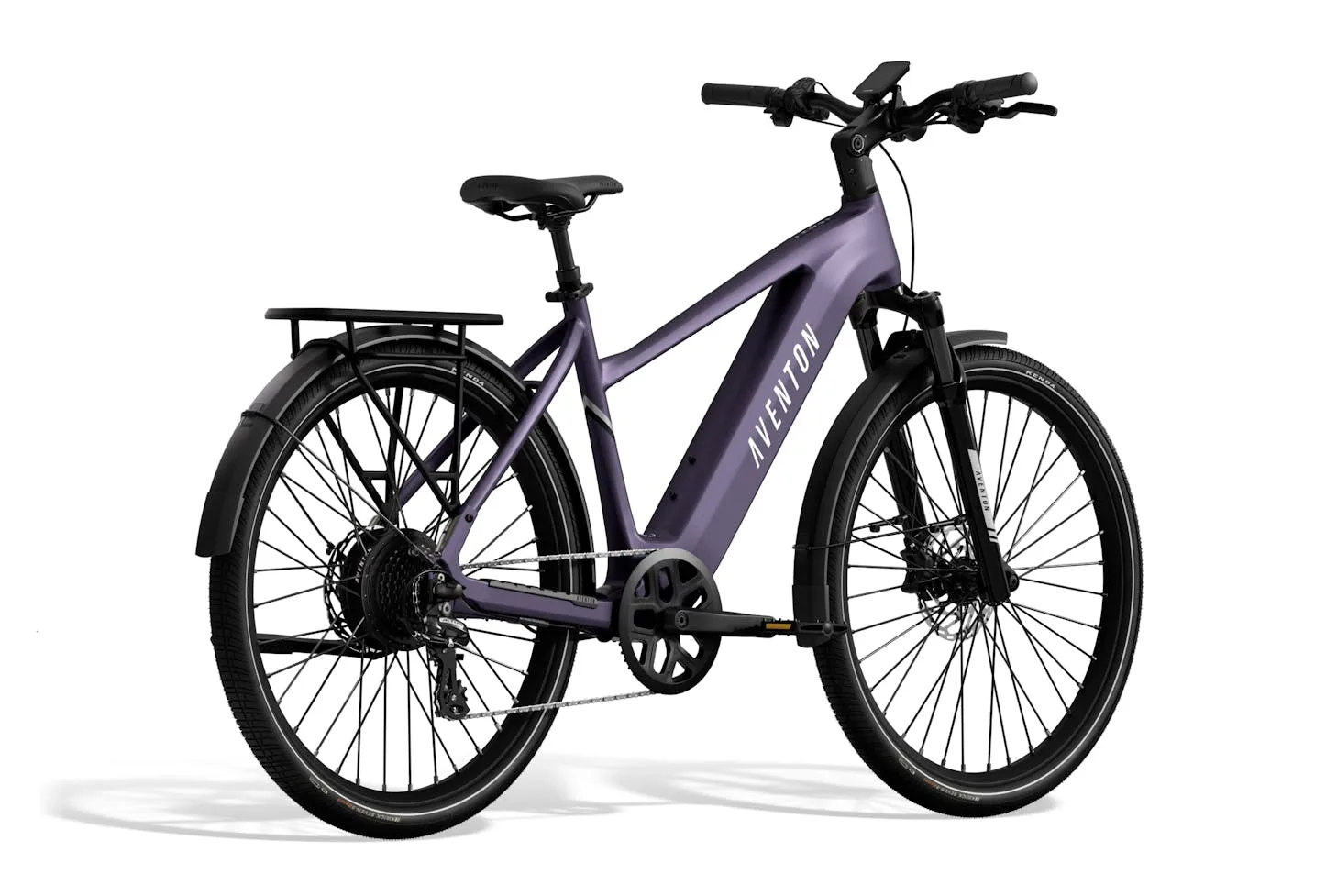
The suspension fork is basic — it takes the top off a pothole and nothing more
The suspension seatpost does more work than the fork, which is the wrong way round
Paint and weld finish are good but a step below Trek's
There is no dealer network: warranty and service go through Aventon directly
Braking is not one of the compromises. 4.1 m dry from 25 km/h, 4.7 m wet, no fade — very close to the Trek.
Verdict
9.0, the top score in the index. A better bike exists — several of them — but nothing on this list gets close to the amount of usable capability the Level 3 delivers for $1,899. If you want one machine to replace car trips and you do not have four thousand dollars, this is the answer.
What works
- 88 km measured from the 733Wh LG 21700 pack, the best real range of any bike here
- Internal torque sensor with a cadence-sensor fallback you can switch to in software
- Built-in GPS, auto-lock and motion detection through Aventon's ACU — genuinely useful, not a gimmick
- Ride Tune lets you shape torque, assist level and pedal response per mode
What does not
- Heavy, and the weight is in the wrong place when you lift it onto a rack
- The suspension fork and seatpost are adequate rather than good
- Aventon services direct; there is no dealer network behind it like Trek's
On paper
| Battery | 36 V 20 Ah, 733 Wh (LG 21700) |
|---|---|
| Measured range | 88 km (high assist) |
| Sensor | Internal torque, switchable to cadence |
| Security | GPS, auto-lock, motion alerts |
| Suspension | Front fork + suspension seatpost |
| Equipment | Rear rack, full mudguards, integrated lights |
How the score is built
In the metal
Where the numbers came from
- Manufacturer specification: Aventon
- Range, braking and charge figures measured by the Duskmile test protocol.
Keep reading
More from Commuter E-Bikes
 8.8
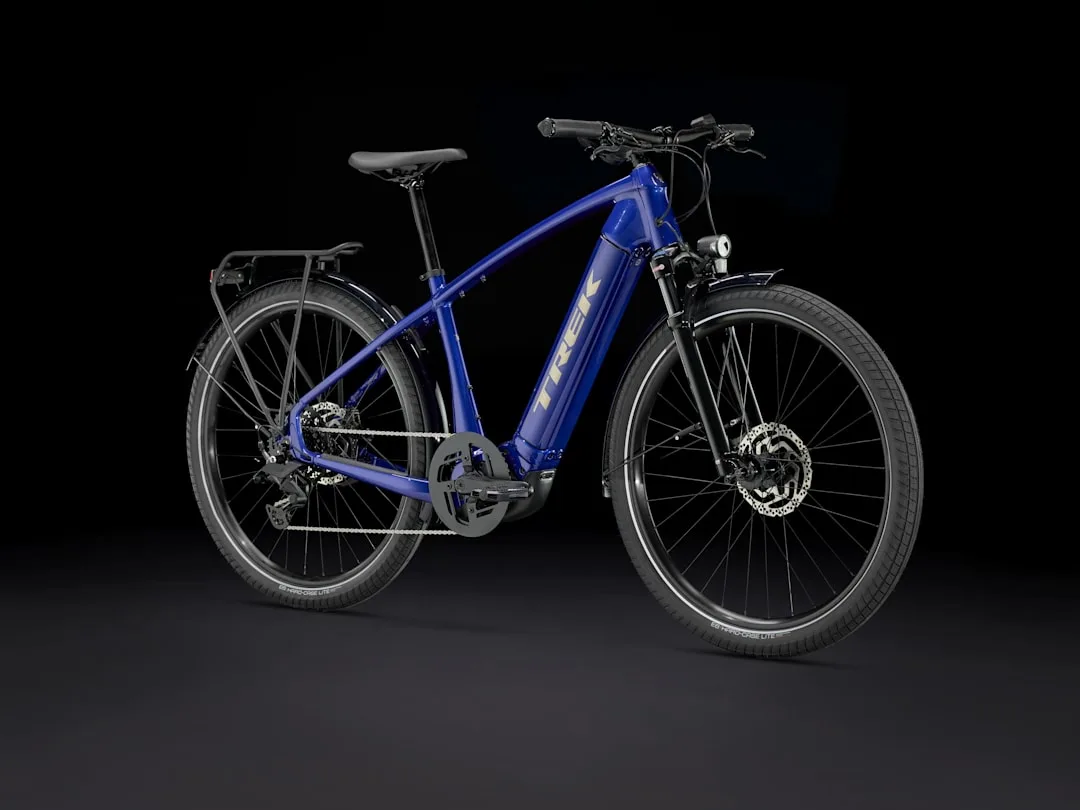
Trek Allant+ 7S Gen 2 review: buy the Bosch, get the dealer
75 Nm of Bosch Performance Line CX, a 500Wh Powertube and a bike shop within driving distance of almost everyone. The Allant+ 7S is the boring correct answer.
- From$3,849
- MotorBosch Performance Line CX, 250 W
- Torque75 Nm
 8.6
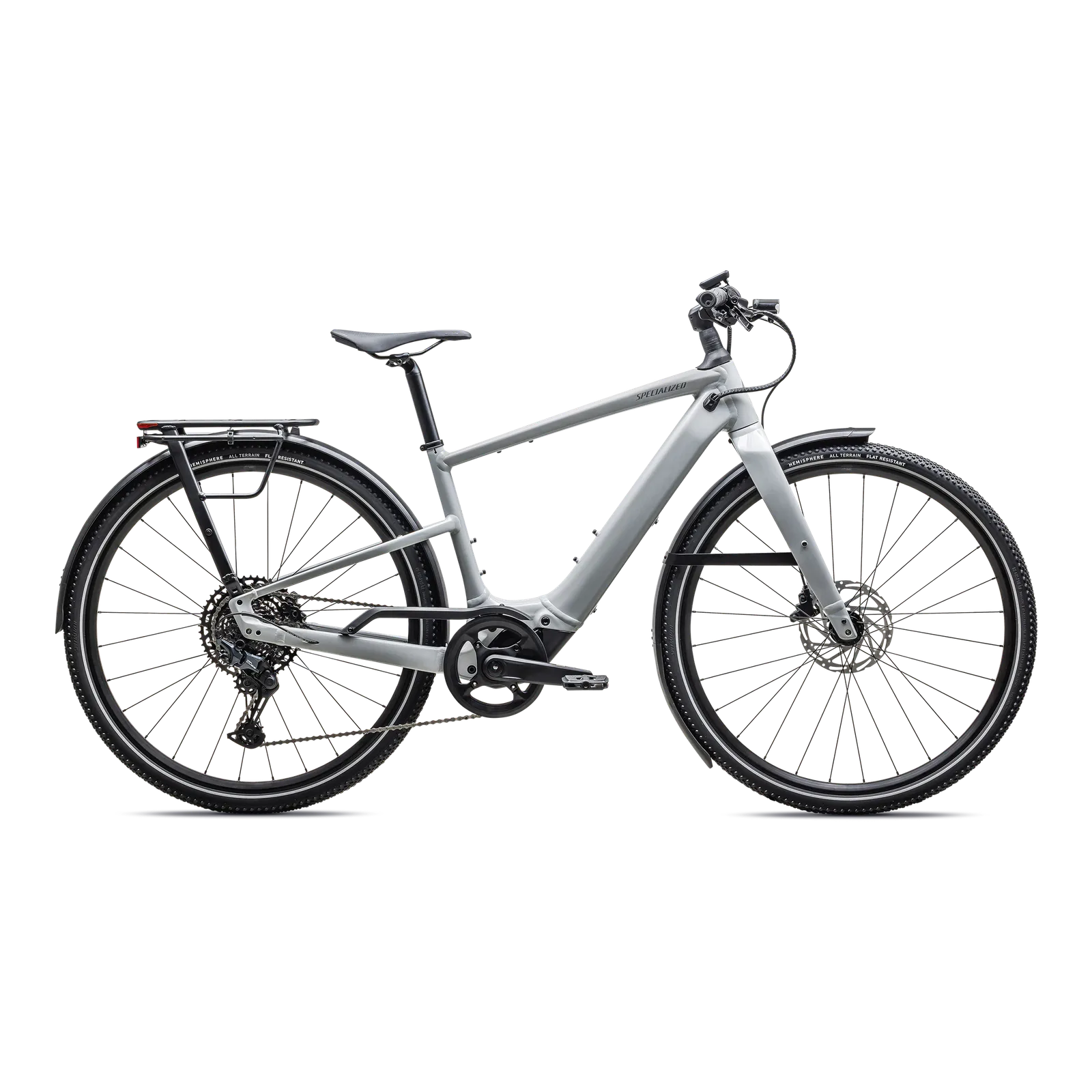
Specialized Turbo Vado SL 2 5.0 EQ: the e-bike that rides like a bike
A 320Wh battery and a 240W motor sound like the wrong numbers until you ride it. Then $5,100 becomes the only thing left to argue about.
- From$5,099.99
- MotorSpecialized SL 1.1, 240 W peak
- Torque35 Nm
 7.8
Cowboy Cruiser: a beautiful bike with a subscription-shaped shadow
19.3 kg, a carbon belt, a 360Wh battery and an app you cannot ride without. The Cruiser is the most seductive commuter here and the one we are most careful recommending.
- From€2,990
- MotorRear hub, 250 W
- Torque45 Nm