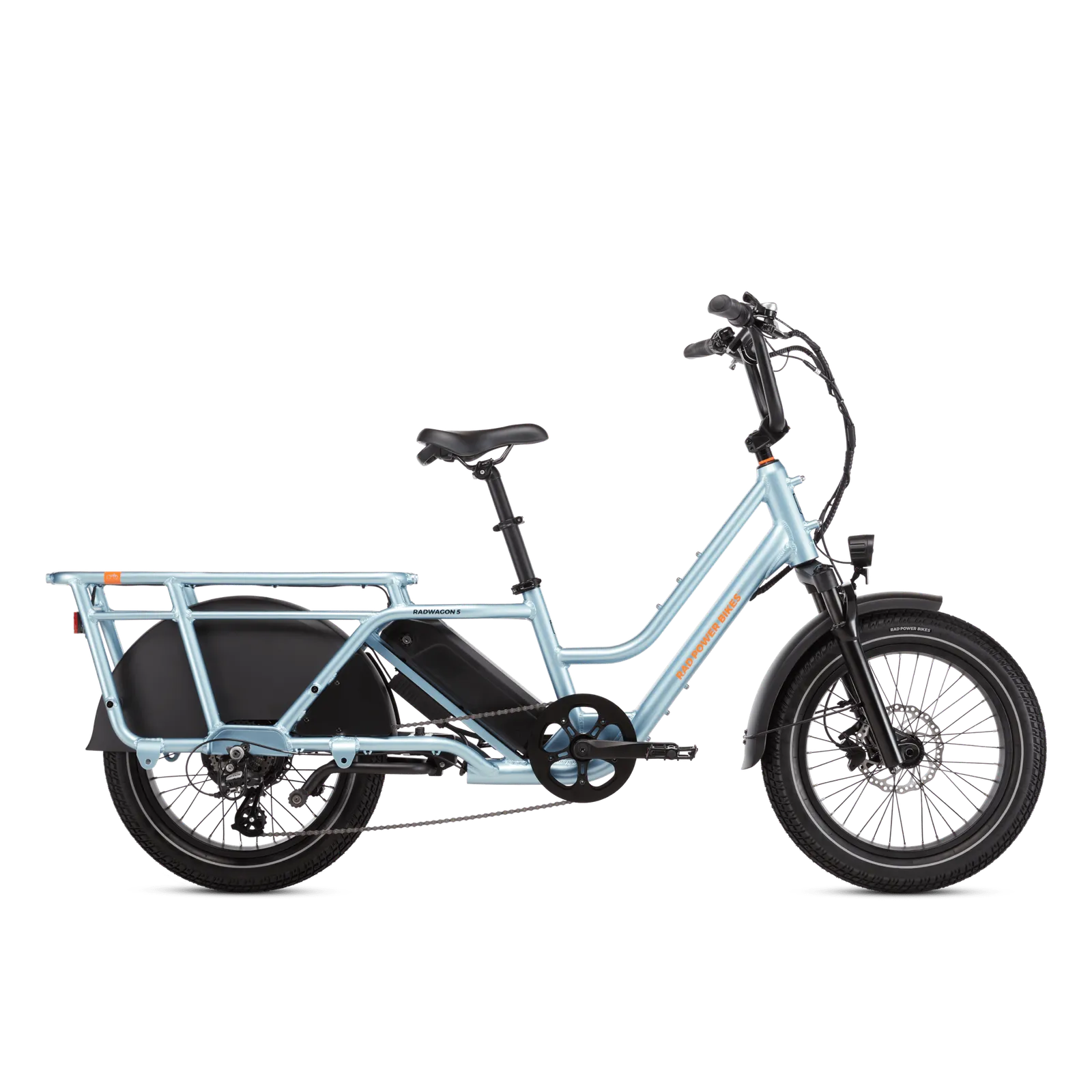
Rad Power RadWagon 5 review: 170 kg of payload for $2,399
Rad shortened the frame, added a torque sensor and turn signals, and kept the price under $2,400. The result is the cargo bike most families should actually buy.
The verdict
Two-thirds of the Tern GSD for less than half the money. The compromises are real and none of them are safety-critical.
Visit Rad Power BikesWhat changed, and why it matters
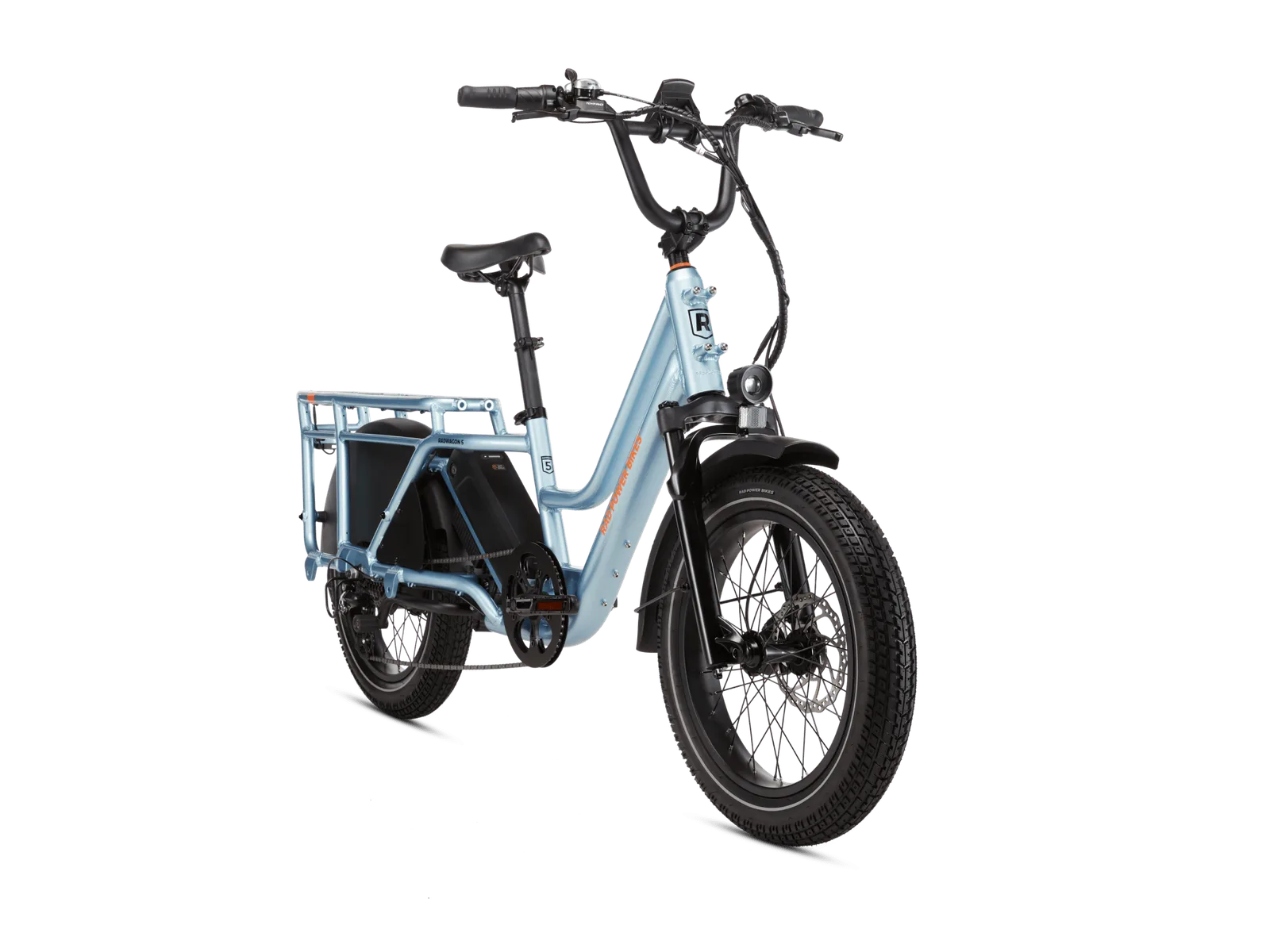
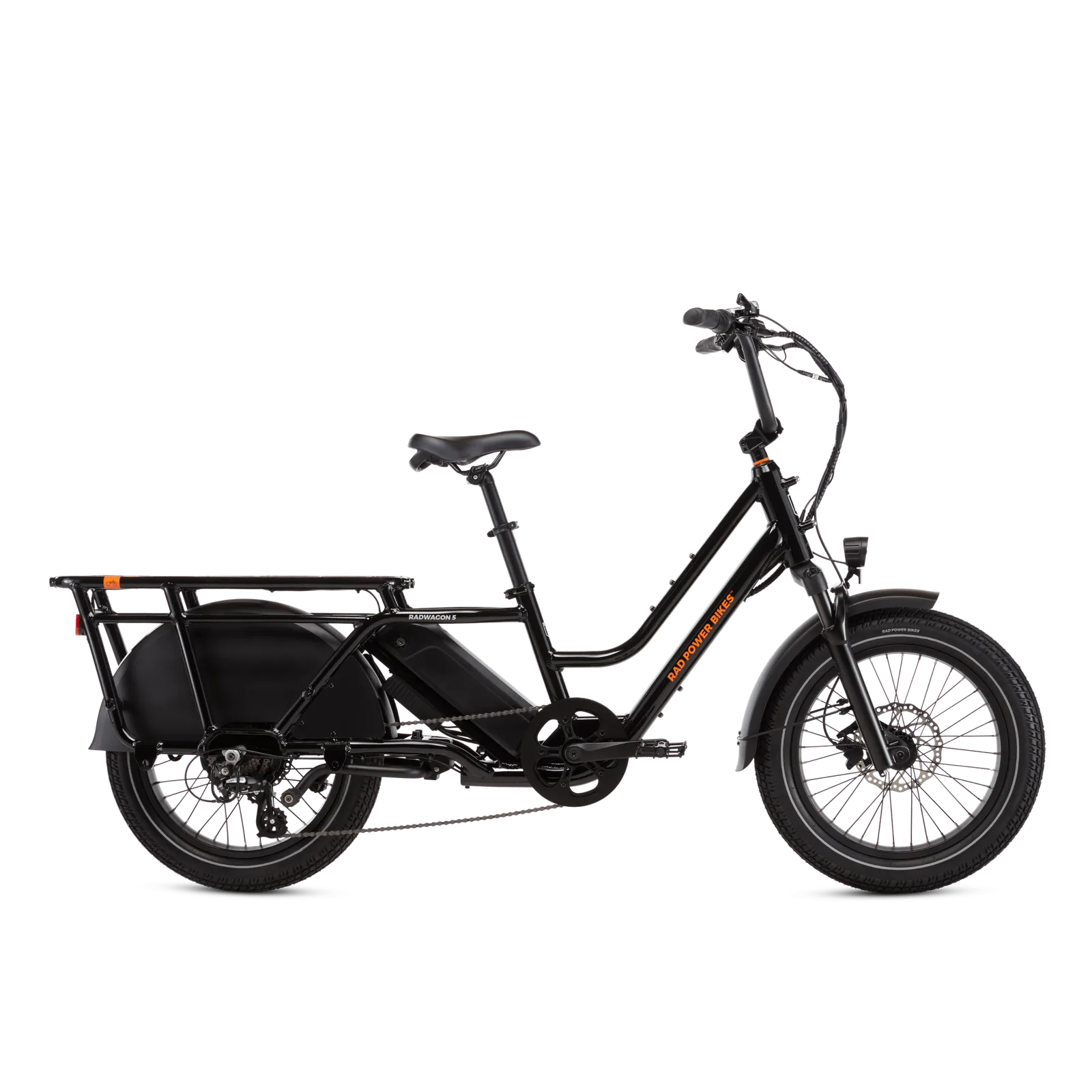
The RadWagon 4 was a long, slightly wayward bike that carried a lot and asked you to concentrate. The 5 is meaningfully shorter, sits lower, and has a torque sensor where the 4 had a cadence sensor. Those three changes together produce a bike that behaves like a bicycle with a long rack rather than like a piece of equipment.
The torque sensor is the important one. On a cadence-sensor cargo bike, pulling away from a junction with 40 kg on the back means a half-second of nothing followed by a shove. On the RadWagon 5 the assist arrives in proportion to your foot pressure, which on a loaded bike in traffic is a safety feature as much as a comfort one.
Loaded, measured
Our loop with a 40 kg load at the highest assist returned 58 km against Rad's claim of up to 96 km. That gap looks large; the claim is for an unloaded rider in the lowest assist. Against the Tern GSD's 63 km on a smaller 400Wh battery, the RadWagon's 720Wh pack is clearly working harder, which is what a hub motor does when it cannot use the bike's gears.
Braking with the load fitted: 4.6 m dry from 25 km/h, 5.4 m wet, with mild fade by the eighth stop. That is respectable for the money and it is the number that shows where the extra $2,600 of Tern goes.
Hills
On our 18% ramp with 40 kg loaded the RadWagon 5 kept going at about 9 km/h with the rider working hard. The Tern, on the same ramp with the same load, did 15 km/h seated. If your neighbourhood is hilly and you load heavily, that difference is your whole ownership experience.
Safety features that are not optional any more
Turn signals front and rear, integrated into the frame and operated from the bar
200-lumen headlight that lights the road rather than marking your position
UL-2271 certified battery with named cells — Samsung 50GB or LG M50LT
Class-switchable up to a limited Class 3, so you can set it legal for your local rules
The battery certification deserves emphasis. Cargo bikes get stored in hallways and charged overnight near sleeping people. A named-cell UL-certified pack is not a luxury.
Four weeks of school runs
We ran the RadWagon 5 the way families do: two children on the rear deck in the morning, a supermarket shop on the way home, and one weekend trip with a bike-mounted cargo bag that would not have fitted in a small hatchback.
The bike handled all of it. Two specific observations matter. First, the low standover height means loading a child while holding the bike upright is a one-person job, which on a tall cargo bike it often is not. Second, the double kickstand is stable enough to load the bike without holding it — the single most underrated feature on any cargo bike, and one Rad got right.
What we would change: the rear deck is bare metal and the seat pads are an accessory purchase. For a bike explicitly marketed at families, arriving without anywhere comfortable for a passenger to sit is a strange omission. Budget for pads and rails on day one and treat the real price as closer to $2,700.
Charging and storage
The 720Wh pack is external and removable, which means you can carry it inside and leave the bike in a shed or a hallway. On a machine this large that is not a convenience, it is what makes ownership possible for anyone without a garage.
A full charge takes about six hours. Rad's app is functional rather than impressive — it reports state of charge and lets you set the class limit, and it does not attempt to be a platform.
Where it feels cheap
Weld finish, paint depth and the quality of the small parts — the kickstand, the rack hardware, the plastic bits around the display — are all a clear step below Tern and Trek. Nothing failed in four weeks, but you can see where $2,600 went.
Verdict
8.4 and a very easy recommendation for the family that wants to drop one car and is not going to spend five thousand dollars to do it. The RadWagon 5 does 80% of what the GSD does for 48% of the money. The missing 20% is ABS, hill performance and finish, and you should know that is what you are trading.
What works
- 170 kg (375 lb) total payload, with a 120 kg rider allowance
- Torque sensor rather than a cadence sensor, which transforms how a loaded cargo bike rides
- UL-2271 certified 720Wh pack with Samsung or LG cells
- Turn signals and a 200-lumen headlight as standard
- Condensed frame handles far better than the old RadWagon 4
What does not
- Hub motor, so steep hills under load are a question of patience
- No ABS, which on a loaded cargo bike is the gap against the Tern
- Finish and component quality are visibly built to the price
- Servicing is direct-to-consumer, with a mobile service network that varies by city
On paper
| Payload | 170 kg (375 lb) total |
|---|---|
| Max rider | 120 kg (265 lb) |
| Battery | 720 Wh (15 Ah), UL 2271 |
| Claimed range | Up to 96 km (60 mi) |
| Measured range | 58 km (40 kg load) |
| Classes | Class 1, 2 and limited Class 3 |
| Brakes | Hydraulic disc |
How the score is built
In the metal
Where the numbers came from
- Manufacturer specification: Rad Power Bikes
- Range, braking and charge figures measured by the Duskmile test protocol.
Keep reading
More from Cargo & Utility
 9.1
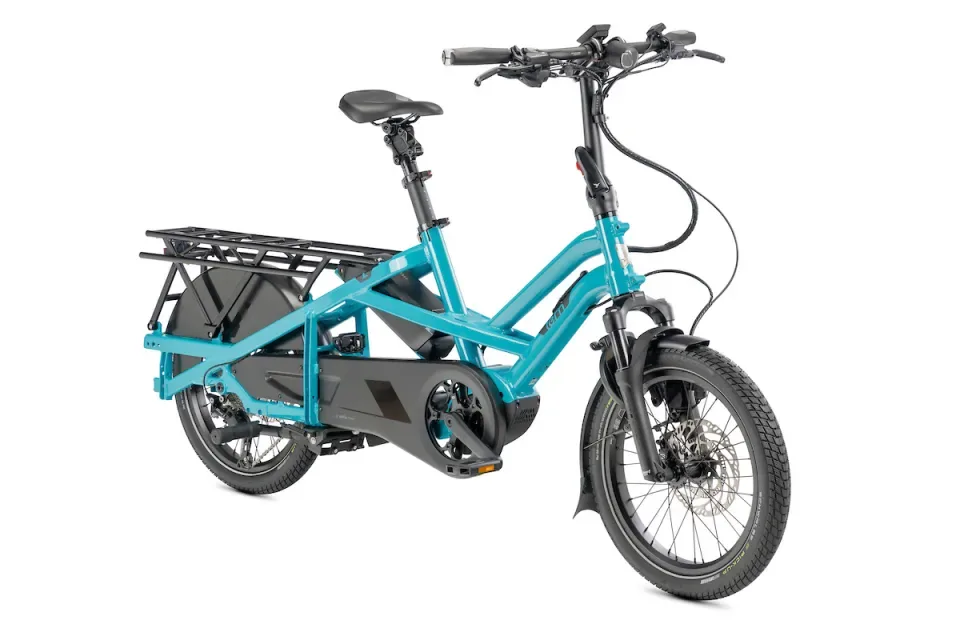
Tern GSD S10 (Gen 3): the only bike here that genuinely replaces a car
210 kg gross vehicle weight, Bosch ABS, dual batteries and a 10-year warranty. The GSD costs $4,999 and is the most obviously worth-it machine in this index.
- From$4,999
- MotorBosch Cargo Line, 85 Nm, 400% support
- Battery400 Wh or 900 Wh (dual capable)