
NIU MQi GT Evo review: a 125cc-equivalent that finally behaves like one
5,000 W, 100 km/h, 128 kg and a 275 kg payload. The MQi GT Evo is the first NIU that does not feel like a compromise against a petrol scooter.
The verdict
The most complete electric equivalent to a 125cc petrol scooter you can currently buy in Europe. Priced like one too, which is the problem.
Visit NIUThe honest test for an electric moped is not whether it is quiet or clean. It is whether somebody who currently rides a 125cc petrol scooter would swap. After four weeks, the MQi GT Evo is the first NIU where the answer is genuinely yes — with one condition about your commute length.
Performance that closes the gap
5,000 W and 100 km/h is the specification that matters. A 125cc petrol scooter tops out around 95–105 km/h, and until recently electric equivalents stopped at 70–80 km/h, which is the difference between joining a dual carriageway and avoiding one.
Acceleration is strong and, importantly, sustained. At 128 kg the MQi GT Evo is roughly the weight of the petrol scooters it competes with, so it does not feel ponderous at low speed the way heavier electric mopeds do.
Two-up, properly
NIU lengthened the seat by about 30% over the NQi series and built in footrests. With a 275 kg payload we rode two-up for a week with a rear top box and never approached a limit. Handling with a passenger stayed composed, though the suspension is firm enough that a pillion notices poor road surfaces.
Range, and where it goes
On our mixed urban moped route at 78 kg the MQi GT Evo covered 94 km. That is good and it is a city figure. Sustained highway running at 90 km/h drops consumption sharply — on a deliberately unrepresentative run of mostly dual carriageway we saw the equivalent of about 61 km.
So: a 20 km each-way urban commute is comfortable with a charge every other day. A 40 km each-way commute with a highway section is not, and you would be charging daily with no margin.
Build and daily use
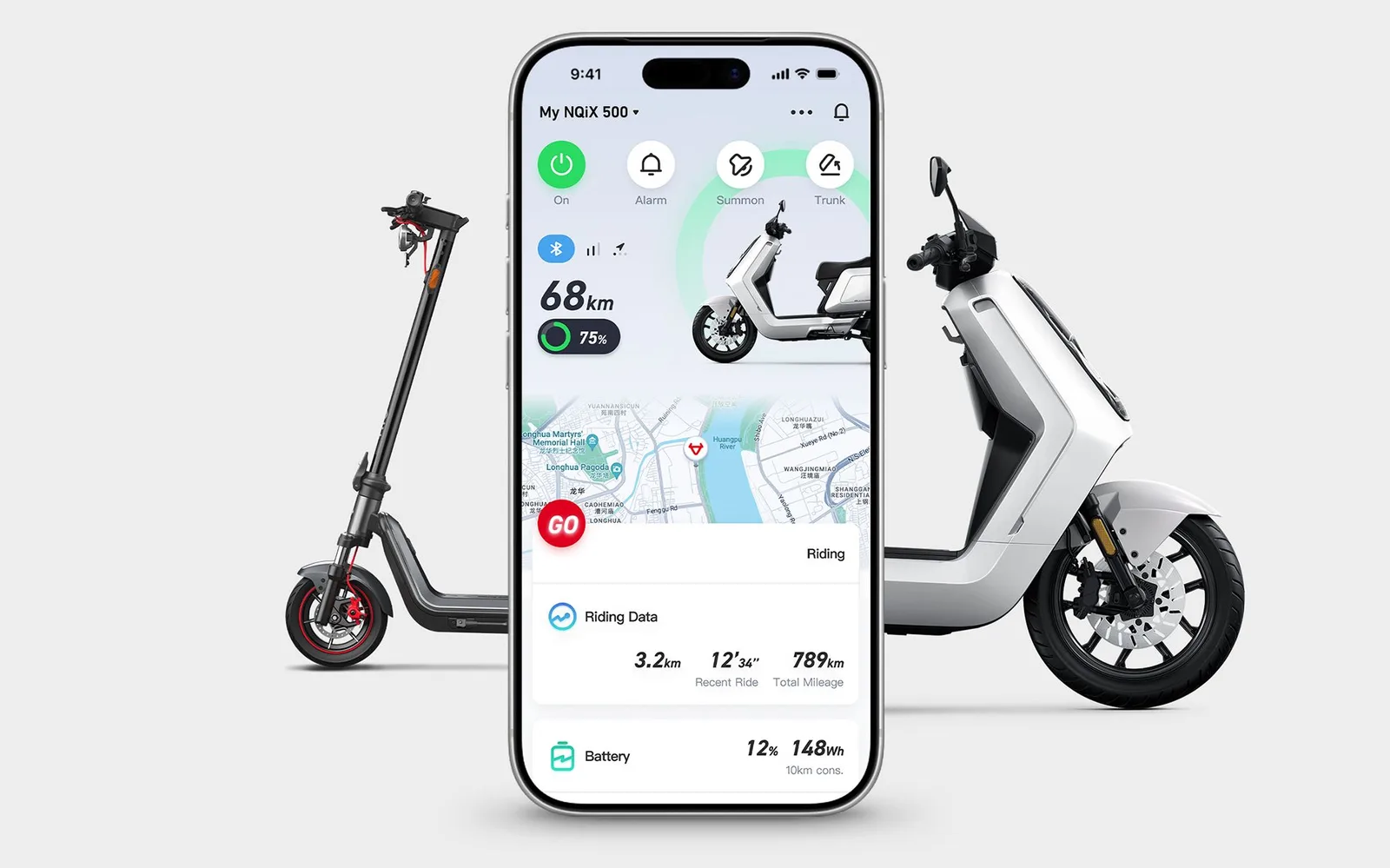
The smart LED dashboard is legible in direct sun and shows charge, mode and speed without clutter
Bluetooth keyless entry worked every time across four weeks, including in heavy rain
Braking measured 12.8 m from 50 km/h dry, which is competitive with a petrol 125
The fourth-generation battery is removable, which matters if you park on the street
Optional cargo rack expands what it will carry considerably
Fit and finish are a step above the cheaper end of the electric moped market. Panel gaps are consistent, the switchgear feels solid, and after four weeks nothing had rattled loose.
The modes are too coarse
Three riding modes sounds adequate until you use them. The lowest mode is restricted enough that pulling into fast-moving traffic requires planning. The highest gives everything and drains the pack at a rate that makes a long day uncomfortable. The middle mode is where the vehicle spends its life, and there is nothing either side of it that is genuinely useful.
NIU's kick scooters let you set per-mode speed caps in the app. The MQi GT Evo, which costs twenty times as much, does not. It is a software problem with a software solution and it should have been solved before launch.
Charging and battery handling
The fourth-generation NIU Energy pack is removable, which is the feature that makes this vehicle viable for anyone parking on a street rather than in a garage. It is heavy enough that carrying it up more than one flight is a chore, and NIU sells a trolley handle for exactly that reason.
A full charge from a domestic socket takes most of a night. There is no fast-charge network behind this vehicle the way Dat Bike has built one in Vietnam, and after riding both machines in the same month the difference in how you plan a day is substantial. Europe's electric moped market has the hardware and not the infrastructure.
One practical note: the battery's state-of-charge display is optimistic in the last 20%, reporting distance that assumes gentle urban riding. Plan on the gauge being about 8 km generous when it drops below a fifth.
The price argument
£4,099 is the issue. At that money a rider can buy an exceptionally well-equipped petrol 125 with over 300 km of tank range and a filling station on every corner. The MQi GT Evo answers with much lower running costs, no emissions at the point of use, and access to city zones that increasingly exclude combustion engines.
Whether that maths works is specific to your city, your mileage and your local incentives. We are not going to run it for you — that is a financial calculation with too many local variables, and it is yours to make.
Verdict
8.0. A properly good electric scooter that has finally stopped asking you to accept less. It loses points for a price that assumes a supportive incentive regime and for a range figure that only holds up in the city. If your riding is urban and your city is tightening emissions rules, it is an easy recommendation.
What works
- 5,000 W and a genuine 100 km/h — it keeps up with urban traffic instead of surviving it
- 128 kg kerb weight, which is light enough to manoeuvre in a parking space
- 275 kg payload and a seat 30% longer than the NQi's — a real two-up machine
- Fourth-generation NIU Energy pack with a mature BMS and swappable format
- Bluetooth keyless entry that worked every time over four weeks
What does not
- £4,099 buys a very well-equipped petrol 125 with a 300 km tank range
- Real range drops sharply at sustained 90 km/h — this is a city vehicle with a highway option
- Charging is slow compared with the Dat Bike's network approach
- Only three riding modes, and the gap between them is coarse
On paper
| Motor | 5,000 W |
|---|---|
| Top speed | 100 km/h |
| Kerb weight | 128 kg |
| Payload | 275 kg |
| Battery | 4th-gen NIU Energy lithium |
| Measured range | 94 km (mixed urban) |
| Riding modes | 3 |
How the score is built
In the metal
Where the numbers came from
- Manufacturer specification: NIU
- Range, braking and charge figures measured by the Duskmile test protocol.
Keep reading
More from Electric Mopeds
 8.1
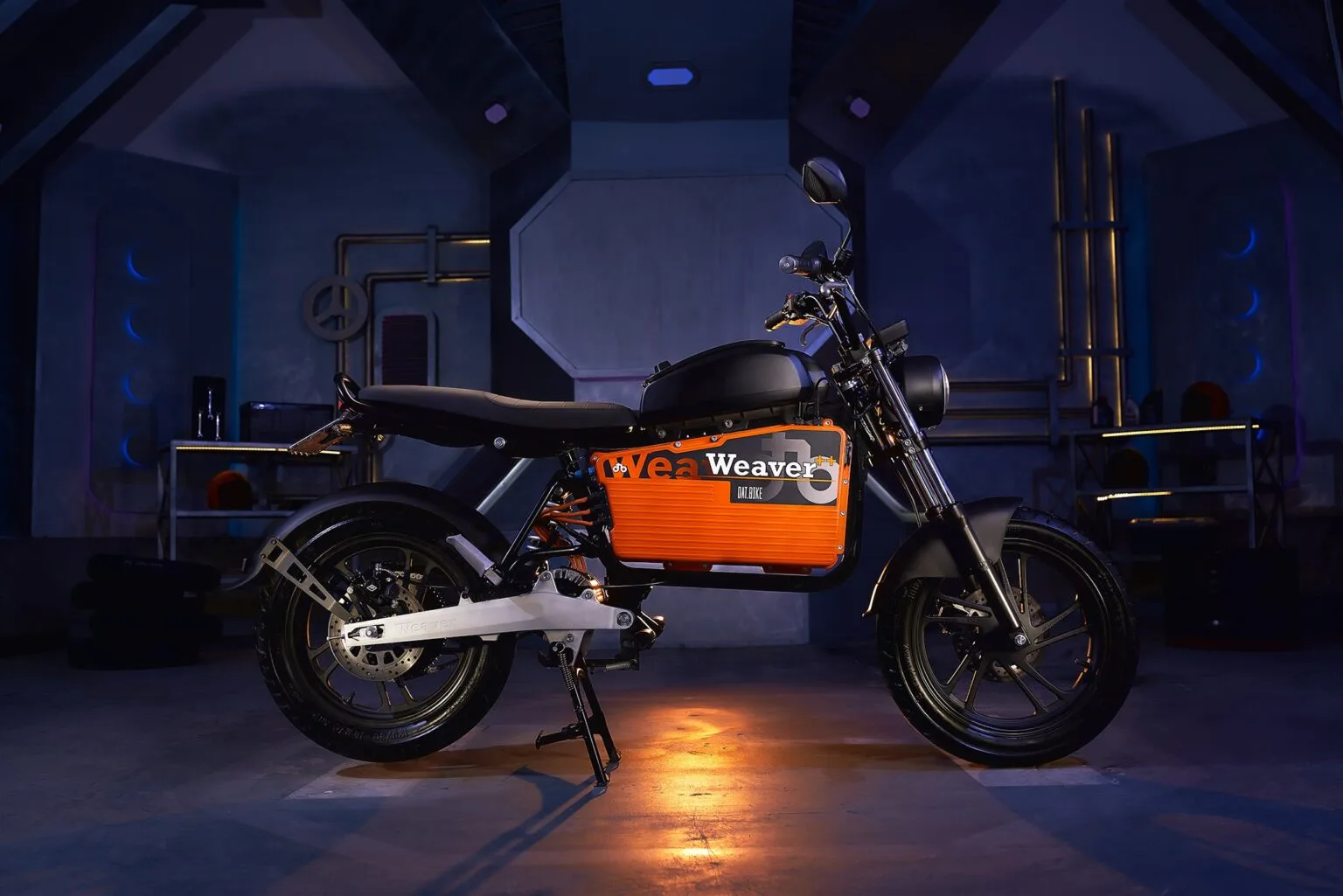
Dat Bike Weaver++: 200 km, 20-minute charging, and a charging network that only exists in one country
A mid-mounted motor, 90 km/h, IP67 and fast charging that adds 100 km in twenty minutes. The Weaver++ is the most interesting electric two-wheeler most of the world cannot buy.
- From₫65,900,000
- Top speed90 km/h
- Claimed range200 km