
Apollo Phantom 2.0: what $2,599 buys that $1,299 does not
Apollo's 52V flagship is quieter, better finished and better supported than anything else in the performance class. Whether that is worth double the Kaabo is the whole question.
The verdict
The most refined performance scooter on sale, and the one where you can feel every dollar of the price — for better and worse.
Visit ApolloA different argument from the rest of the class
Performance scooters usually compete on peak numbers. Apollo does not. The Phantom 2.0 is slower than a Dualtron Thunder 3, shorter-legged than a Kaabo Mantis King GT on paper, and costs more than either makes sense at first glance. Its argument is that it is the only one built like a vehicle rather than like a very fast toy.
After a month, we mostly agree with that argument, and we still cannot make the value column work.
The MACH1 controller
Apollo moved the Phantom to a 52V architecture with its own MACH1 controller pushing 25 A per motor. The headline is 66 km/h. The actual achievement is how undramatic the machine feels getting there. Throttle response is linear from a standing start through to about 50 km/h, with none of the on-off surge that makes cheaper high-power scooters genuinely dangerous in traffic.
There is also proper software behind it. The app gives you dynamic range estimates that update with terrain, adjustable regen strength, adjustable acceleration curves and recorded trip data. It is the closest thing to a car's drive-mode system on two wheels standing up.
Regen on its own throttle
Same implementation as the Apollo City 2.0 and just as good: a left-hand thumb throttle that applies motor braking proportionally, recharging the pack by up to 10% on a hilly route. On a heavy fast scooter this matters more than it does on a commuter, because it takes load off the mechanical brakes on every long descent.
What we measured
52 km on the standard loop, ridden in the highest mode at 78 kg
3.3 m dry braking from 25 km/h, 4.2 m wet, no meaningful fade over ten stops
Motor temperature after a sustained 18% climb stayed well inside comfortable limits
Charge time from empty on the standard charger: a little over six hours
Six hours is the one measurement that annoyed us. A machine at this price should ship with a fast charger, not sell one.
Built like a vehicle
Turn signals on the deck and stem. A horn that people hear. Lighting that illuminates the road instead of announcing your presence. A quad-adjustable suspension you can dial for your weight and the surface. Cable routing that does not chafe. These are not exciting features and they are the reason the Phantom feels expensive in the hand.
Support is the other half of it. Apollo runs North American service and parts, and in a category where a failed controller can mean a three-month wait for a container, that is worth real money.
The suspension, set up properly
Quad adjustable suspension means four separate preload settings, and out of the box they are all in the middle. Left there, the Phantom feels slightly floaty at speed and slightly harsh at low speed — the two complaints that appear in most short reviews of this scooter.
Spend twenty minutes with the supplied tool. We set the front firmer and the rear softer for a 78 kg rider, and the change was transformative: the front stopped diving under braking and the rear stopped skipping over expansion joints. It is the single highest-value thing you can do to this machine and almost nobody does it.
Apollo's own setup guidance is buried in a support article rather than in the box, which is a documentation failure on a $2,599 product.
Four weeks of ordinary use
Nothing loosened, nothing rattled and nothing needed adjusting beyond the suspension. The folding mechanism stayed tight, which on a heavy scooter with a long stem is the failure point most likely to appear in month two.
The deck is large enough to stand with feet side by side rather than in line, which after 30 minutes of riding is the difference between comfortable and not. The grip tape held up through two weeks of rain without lifting at the edges — a small thing that goes wrong on cheaper machines constantly.
The value problem
The Kaabo Mantis King GT costs $1,299 on sale. It has a UL-certified battery, hydraulic discs that stop shorter, adjustable suspension, and 60 km of measured range against the Phantom's 52 km. It is worse finished, worse supported and much less pleasant at 60 km/h.
If you ride hard, often, and want the machine to still feel tight in three years, the Phantom earns its premium. If you ride occasionally and value the money, it does not. That is why the value component drags this to 8.3 despite a build score of 9.1.
The legal note, again
A 66 km/h standing scooter is not a legal personal light electric vehicle in most of Europe, the UK, Australia or much of North America. Apollo's own site is careful about this and so are we. Check your local rules; nothing in this review is advice to ride it anywhere it is not permitted.
What works
- The MACH1 controller makes 66 km/h feel boring, which is exactly what you want at 66 km/h
- Turn signals, a proper horn and deck lighting — it is the only machine in this class built like a vehicle
- Regenerative braking on its own throttle, recovering up to 10% of pack charge
- North American support and parts that arrive in days, not months
What does not
- $2,599 buys two Kaabo Mantis King GTs with change for helmets
- Heavy, and the folded footprint is large
- Fully illegal to ride on a public road in most of the world at anything near its top speed
On paper
| System voltage | 52 V |
|---|---|
| Controller | MACH1, 25 A per motor |
| Top speed | 66 km/h (41 mph) |
| Measured range | 52 km |
| Regen recovery | Up to 10% of pack |
| Suspension | Quad adjustable |
How the score is built
In the metal
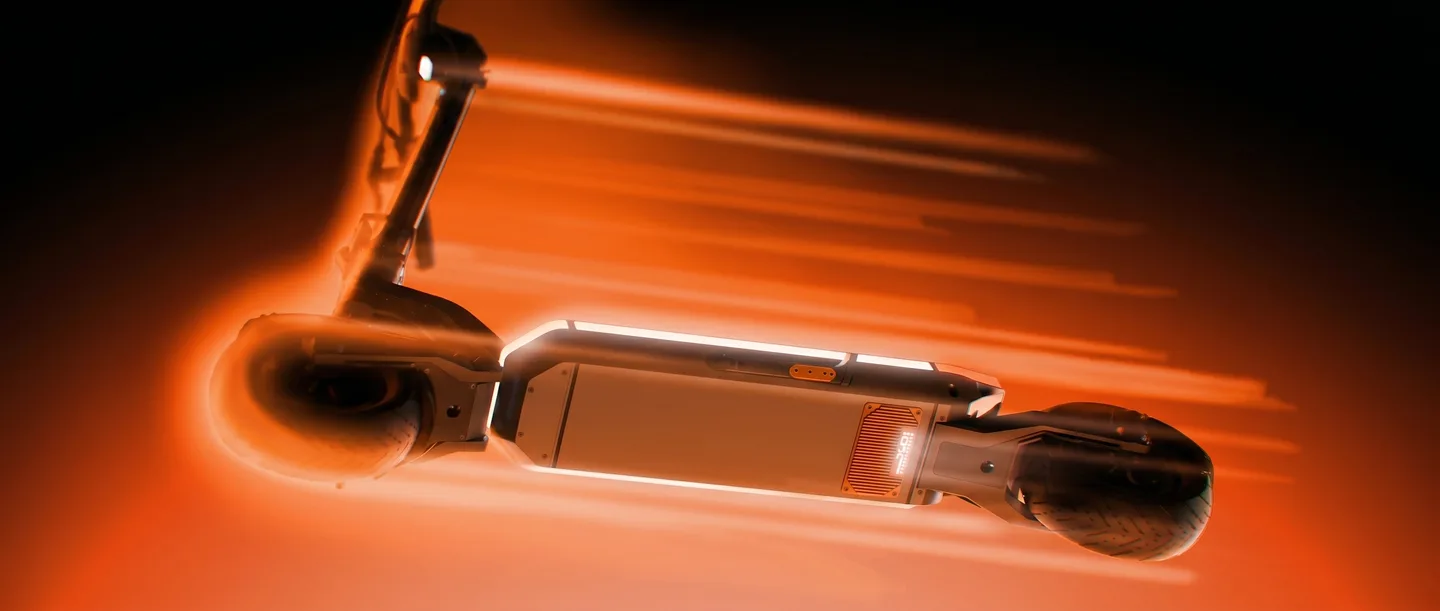
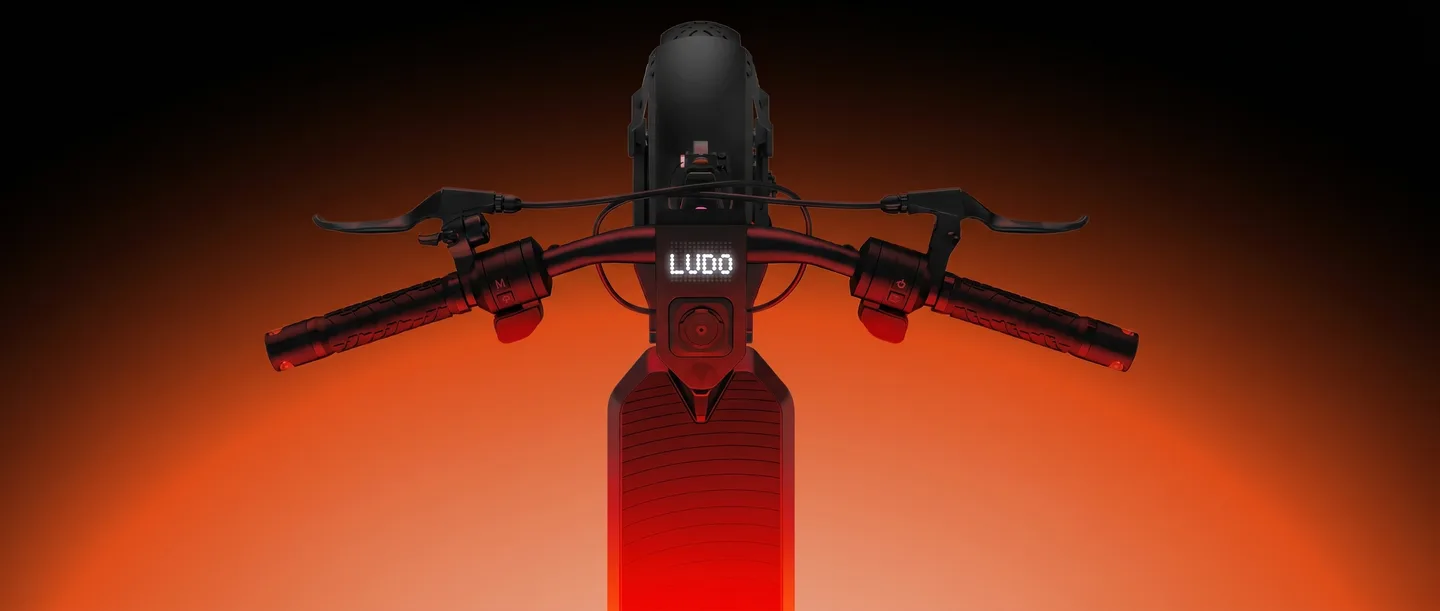
Where the numbers came from
- Manufacturer specification: Apollo Scooters
- Range, braking and charge figures measured by the Duskmile test protocol.
Keep reading
More from Performance Scooters
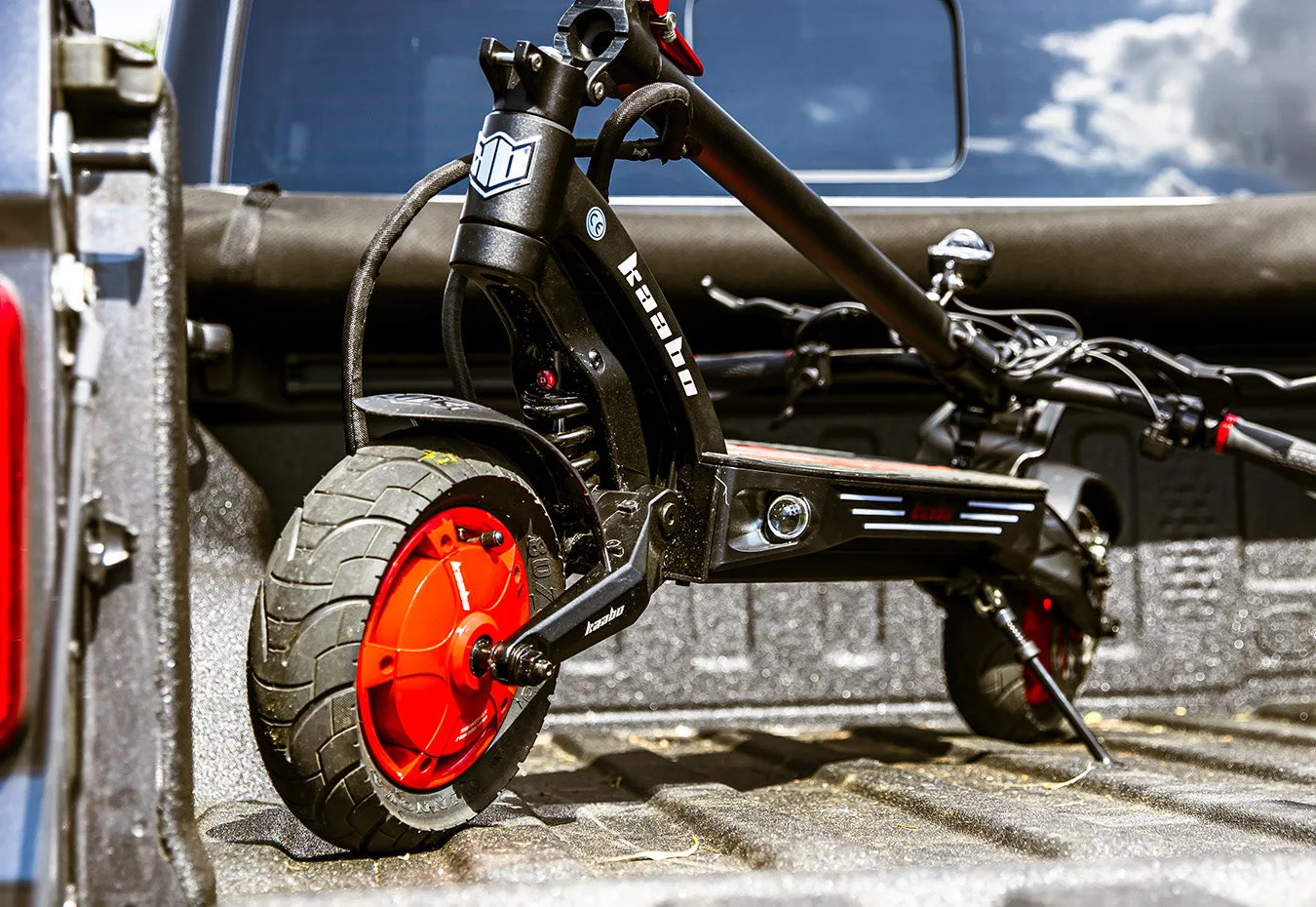 8.9
Kaabo Mantis King GT review: the performance scooter that makes the expensive ones look silly
A 60V 24Ah UL-certified pack, adjustable hydraulic suspension at both ends and hydraulic discs, for $1,299 on sale. This is where the performance category gets sensible.
- From$1,299 (list $1,699)
- Motors2 × 60 V 1100 W
- Battery60 V 24 Ah, UL certified
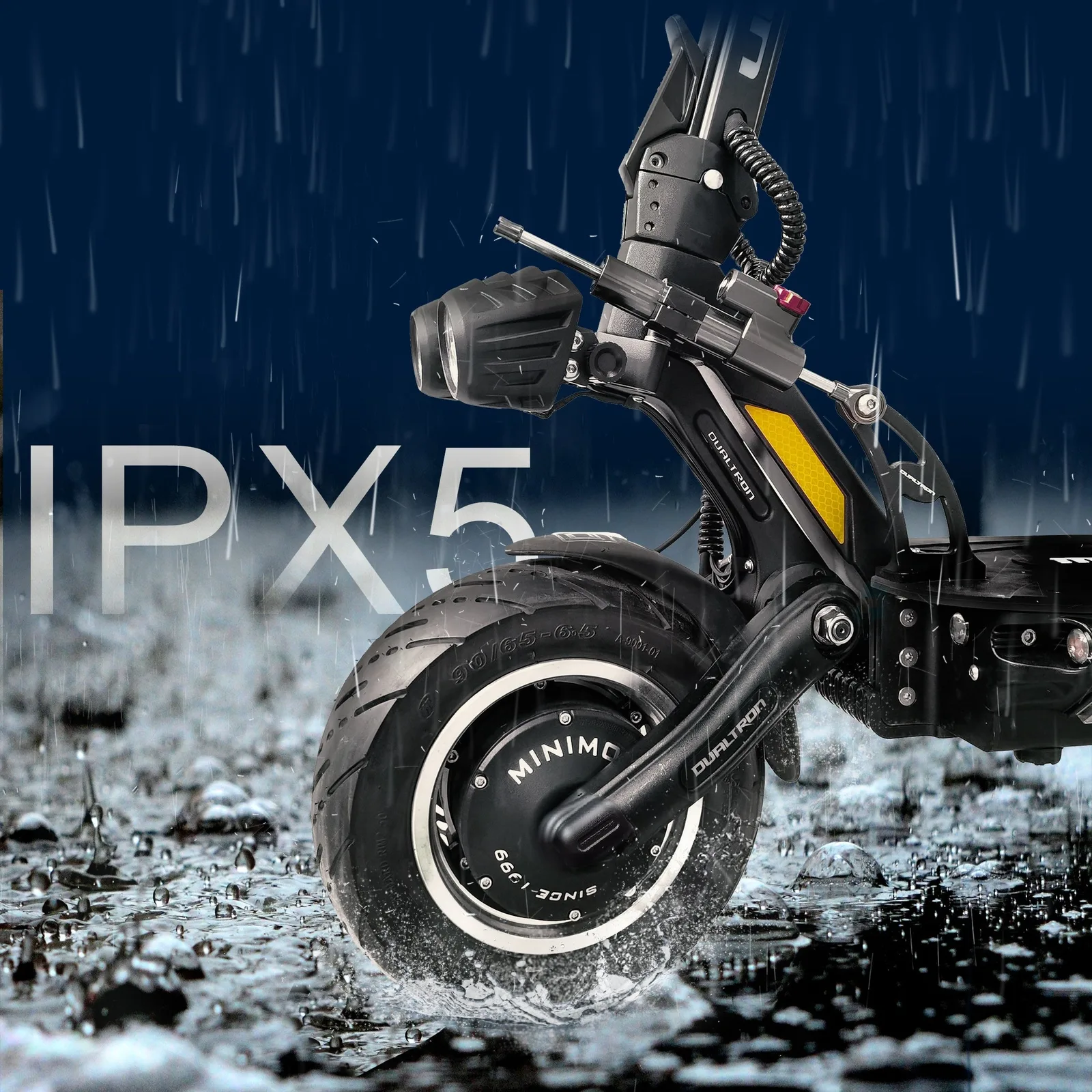 8.2
Dualtron Thunder 3: 51 kg, 100 km/h, and a conversation about where you are allowed to ride it
A 72V 40Ah pack, four-piston hydraulic brakes and a $3,499 price. The Thunder 3 is a superb machine and an awkward one to recommend.
- From$3,499
- Battery72 V 40 Ah (LG 21700)
- Claimed range160 km (100 mi)